Showing posts with label terrapin books. Show all posts

Sunday, September 18, 2022

Thoughts on Poetry Manuscript Submission


I just completed the 15th reading period for Terrapin Books. It's hard to believe but the press has now been around for seven years! During that time I've read a lot of poetry manuscripts. I've read lots of wonderful material. But I've also noticed some of the same errors being made again and again. So I've jotted some of them down and offer them here, hoping that they might be useful to you as you prepare your next manuscript submission for Terrapin or another press. Of course, these are my thoughts; another press may have very different thoughts.

1. The first thing your reader sees is your cover letter. Make it work for you. Keep it brief and focused on you as a poet. Don't bother to tell your age (you'd be surprised how many people share this irrelevant information). Also don't list the big name poets you've studied with. Do not be a name dropper!

2. Also do not include in your cover letter any words of praise from other poets or teachers. This will not affect the reader's impression of your work. Definitely do not include blurbs. Why would you already have blurbs, the potential publisher wonders. But feel free to include information about any close acceptances the manuscript has had.

3. If you are asked to provide a description of your manuscript's content in your cover letter, keep that brief and focused. If you find it impossible to describe your manuscript, it's possible that you haven't yet found its center. I see lots of descriptions that list a dozen themes covered in the manuscript: nature, climate change, love, death, religious conversion, pollution, birds, waterways, marriage, children, and so on. Look at that list. Can you find some common themes? Might they suggest a way to tighten up your cover letter—and your manuscript? I also often find that after a list of a number of dark themes, the poet adds a note to the effect that there's also some optimism or that the collection ends with hope. It's not your job to cheer me up. If it's there, fine, but don't force it. I like darkness and so do a lot of other readers.

4. The next thing your reader sees is your title. Don't title your collection with a word no one knows. Why confuse the reader and put a fence around your collection? You can get away with this for an individual poem but not for the collection title. 

5. Also regarding titles, there's a trend towards long titles. Go easy here. Some of the ones I've seen just struck me as a kind of strutting, showing off—look at how clever I am! Also very long titles are difficult to format on a cover. This won't get you rejected, but why do it?

6. In your poems, be parsimonious with "how" clauses. I too often see lists of these. This has become an overused strategy. Likewise, avoid overusing "the way" to begin items in a series.

7. Be very sparing with poems about poems. I can take maybe one per manuscript. You won't get rejected if you have more, but if your manuscript is accepted, I will almost certainly ask you to revise some of those poems. I find this kind of poem particularly vexing when the poem is making its way along beautifully on a particular topic and then suddenly starts referring to itself as "this poem." That knocks me right out of the poem. My heart sinks with disappointment.

8. Avoid great blue herons in your poems. I add this here for a light touch, but seriously that bird is so overused in poetry! Surely there are other magnificent birds. And does it have to be a bird?

9. In your Acknowledgments do not include bibliographical information such as page numbers. Just journal titles and poem titles. And be sure to use alphabetical order. Get out a few books by the press you're submitting to and follow the format used for the Acknowledgments in those books. It's pretty standard. 

10. Read the Guidelines and follow them. Also read any FAQs that the press provides. Terrapin provides FAQs which should answer most questions submitting poets might have. Yet each submission period brings some chapbook submissions (we don't do chapbooks) and a few New & Selecteds (we also don't do these). Don't waste your time and submission fee by submitting what the press doesn't publish.

11. Terrapin's Guidelines ask that 25%-50% (or more) of the poems in the manuscript have been previously published. Why then submit a manuscript with none of the poems previously published? A few years ago someone who wanted to submit but who hadn't published any of the poems chewed me out about this request. It wasn't his fault, he insisted, that none of his poems had been published; it was the fault of journal editors who wouldn't accept his poems. My argument ended there.

12. Don't wait until the last minute to submit your manuscript. Poets ask if there's any benefit to submitting early or late. Really, no. But lots of poets wait until the last two days of a submission period to submit. Might make the reader cranky. Not me, of course, but maybe some other reader. 

13. Get your hands on at least one book by the press you plan to submit to. (If you can't afford to purchase a book or two, at least peruse the Look Inside feature at Amazon for a sample of what the press publishes and how they format a book.) It makes no sense to submit to a press you know nothing about, yet I more than occasionally receive submissions from poets who clearly know nothing about the  press.

14. Only submit to a press if you would be happy to be published by that press. If your heart is set on winning a contest, then only submit to contests. A few years ago I accepted a manuscript. The poet stalled her response, then said she'd decided to withdraw as she really wanted to win a contest. She should never have submitted to the press in the first place.

15. Practice Patience and Persistence. Poetry is a slow art. I have a number times received two or even three submissions from the same poet. How is it possible to have that many solid manuscripts in circulation? Consider pulling out the very best poems from the manuscripts and making one new manuscript.


I hope that these tips will give you some guidance as you put together or revise your manuscript. Terrapin's next reading period is January 24 thru February 28. Check out our Guidelines and our FAQs.

Wednesday, June 29, 2022

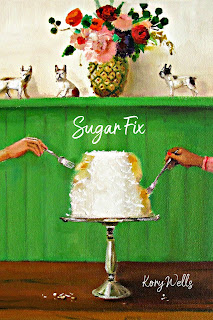
Terrapin Books Interview Series: Ann Keniston Interviews Kory Wells


The following is the sixteenth in a series of brief interviews in which one Terrapin poet interviews another Terrapin poet, one whose book was affected by the Pandemic. The purpose of these interviews is to draw some attention to books which missed out on book launches and in-person readings. Ann Keniston talks with Kory Wells about using a central metaphor as an organizing principle, the role of facts and stories in a collection, and the arc of a poetry collection.

Ann Keniston: Sugar is central to your collection, as the book title, Sugar Fix, makes clear. Yet sugar seems to mean different things—at times it’s aligned with desire and pleasure, and at others it’s something to be resisted, an “urge,” in one poem, that the speaker is “unlearning.” Can you talk a bit about how you understand sugar in the collection? How did it become central to the collection? Did its meaning change or become more complex as you worked on the manuscript?

Kory Wells: It’s hard to believe now, but I didn’t know that sugar was going to be such a central motif of the collection for quite some time. I knew I was writing about identity and connection and love, and that I was witnessing to the power of story and memory. I also knew I wanted to incorporate a wider sense of history and social context. But it wasn’t until I wrote “Due to Chronic Inflammation,” which interweaves the speaker’s addiction to sugar with America’s addiction to gun violence, that the bells went off in my head: I can’t tell my story without talking about sugar: red velvet cake, sugar sandwiches, Dairy Queen, marshmallow pies. My ancestors even lived at a place called Sugar Fork! Sugar represents many factual details of my family history. But more than that, for me sugar represents longing: my longing for romance, yes, but more than that, for kinship and connection—even across time and the troubling aspects of our country’s history and present.


Keniston: I noticed that you use the word “fact” several times in the course of the book, often in relation to something you want to amplify or contradict. And then the word “story” also recurs. Can you talk about how you see the relation between those two terms? Are stories a way to correct so-called facts or to amplify or complicate them? Given that many stories are associated with family, especially a grandmother figure, do these stories have the weight of truth, perhaps emotional truth? Or can they also be misleading or deceptive?

Wells: Thanks so much for this question! This tension between stories and facts dominates our entire socio-political climate, right? It’s common to hear someone say, “We need all the facts” and believe those facts tell THE story. But we don’t often hear, “We need all the stories.” And even if we did, how often are we truly open to hearing someone whose story we think we may not like or agree with?

I think that’s what Sugar Fix is attempting to champion, in its own small way—the idea that we need all the stories, and that the best, fullest stories dissolve the line between us and them.

A major thread of this book comes from my obsession with how my family’s oral history jibes—or fails to jibe—with facts I learned from genealogical research and DNA testing. In my experience, the stories my grandmother and other family members told definitely captured some of the truth, and that still matters deeply, even if it’s not the full story.

The facts are that my family traces back to the Catawba, and before that a Saponi tribe, but hearing the story that I was descended from Cherokee who narrowly escaped the Trail of Tears still shapes the empathy and connection I feel today.

The facts are that I’m descended from a woman who was arrested for dancing and masquerading as a man in Philadelphia in 1703. The facts are also that I am of African descent. I can’t say these facts—which are relatively new to me—are life-changing. But they expand my story, and that’s part of what I was writing toward in these poems. How I include new facts in my story, my own self-reckoning, particularly as a person who tries to be intentional about connection and allyship, is, to me, significant.  


Keniston: I was really interested in your use of the word “cousin,” first in relation to the possibly-but-probably-not blood relative Gypsy Rose Lee and then as an addressee in several other poems. It seems like part of the book’s project is to destabilize conventional lineage-based ideas of family, as well as race and history. Can you talk a bit about how you extend the notion of family, maybe especially in relation to your use of form, including renewable forms like the villanelle, sonnet, and ghazal? To put it another way, what is the relation of the theme of family to that of political reimagining in the book?

Wells: Oh, thank you for noticing how I address cousins! Perhaps I’m intrigued by the idea of consanguinity because I’m an only child. Or because I grew up in a small town, where people are more connected than you realize, and you have to be careful you don’t bad-mouth your new friend’s second cousin. Or perhaps, amid our national divisiveness, I’m reaching, reaching for common threads.

At any rate, I think my use of form is, in one sense, a nod to the various rhythms that have shaped me as a Southerner with Appalachian roots: a rich storytelling tradition, the cadence of Southern and Appalachian speech, the rhythms of old time and classic country music, the spread of a Sunday soul food dinner, the particularly Southern customs of hospitality and manners. All of these things ignite my sense of kinship.

I’d be remiss if I didn’t acknowledge that, as someone who came to poetry by way of computer science, I have occasionally felt like an outsider to the literary community. I want to be clear: I do feel a deep belonging much of the time—I have so much gratitude for the kinship of fellow writers! But let’s face it—there are a lot of poets, and it can be easy to feel overlooked. By employing poetic form, I think I am, in a small way, acknowledging literary tradition and saying, “I want to belong.”


Keniston: Can you talk about the shape of the book? Your last section title is “As I Already Said, Sugar” and circles back to some of the themes of the first section. Yet things seem different by the end of the manuscript: several of the poems look forward to an uncertain future rather than back to childhood. Can you talk about how you imagined the arc of the book?

Wells: I enjoy reading poetry collections that have a definite arc, so I started thinking about that with my manuscript early on. Initially, for a few years while I was working on the manuscript, I used a James Dickey quatrain—the last lines of “Into the Stone” —divided into four sections as an organizational device. One of my early readers, a novelist friend, said it was “impenetrable,” so that’s when I backed up and started looking at excerpting my own words as section titles. But the Dickey excerpt was still in my mind: this idea of how the dead “have the chance in my body,” and how that interweaves with stories and what we carry, and the comfort of knowing and being known.

In revision, I also faced the fact that my grandmother, who is a definite character in my earlier chapbook, Heaven Was the Moon (March Street Press) and who I thought I was sort of done with, deserved a greater role in framing the collection. “Untold Story,” which is the first poem in section one, and “When the Watched Pot Boils,” the first poem in the final section, were both written relatively late in the process and reflect how I finally came to understand this collection as being all about story.


Sample poem from Sugar Fix


He drove a four-door Chevy, nothing sexy,
but I'd been thinking of his mouth for weeks


when he finally called me up
and asked if I'd like to get
some ice cream.

I was full from supper and my
thighs sure didn't need it, but
I've never struggled with

priorities. That Dairy Queen
had gone downhill even then—
bright red logo faded like a movie star
who's kissed away all her lipstick—
but it still had a drive-in, and he
knew how I was about nostalgia

and sugar. This is how a place
became our song. We parked
under the sun-bleached canopy
and I leaned over him
pretending to read the menu.
Then at his rolled-down window
we confessed our desires
more or less into thin air,
which now that I think about it
sounds a little like church
and believe you me

I'd been praying about him.
How I wanted him.
How if I couldn't have him,
I wanted to be free
of want. Do you get that way
sometimes? Where all
you can think about is
chocolate, chocolate, chocolate,
or in my case man, man,
that man. The bench seat
of his Chevy became a pew,
the space between us palpable
as the early summer humidity.

I kept telling myself
it's just an ice cream,
but even then I knew
love is a kind of ruin.
When those cones arrived
so thick and voluptuous,
I almost blushed to open my mouth
before him, expose my eager tongue.

                                    
                                       Click Cover for Amazon


Kory Wells is the author of Sugar Fix, from Terrapin Books. Her writing has been featured on The Slowdown podcast and recently appears in The Strategic Poet, The Literary Bohemian, Poetry South, Peauxdunque Review, and elsewhere. A former software developer who now nurtures connection and community through the arts, storytelling, and advocacy, Kory mentors poets across the nation through the from-home program MTSU Write and has served as the poet laureate of Murfreesboro, Tennessee. 


www.korywells.com


Ann Keniston is a poet, essayist, and critic interested in the relation of the creative to the scholarly. She is the author of several poetry collections, including, most recently, Somatic (Terrapin, 2020), as well as several scholarly studies of contemporary American poetry. Her poems and essays have appeared in over thirty journals, including Yale Review, Gettysburg Review, Fourth Genre, and Literary Imagination. A professor of English at the University of Nevada, Reno, where she teaches poetry workshops and literature classes, she lives in Reno, Nevada.
www.annkeniston.com


Friday, June 10, 2022

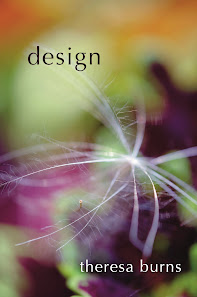
Terrapin Books Interview Series: Kory Wells Interviews Theresa Burns

Click Cover for Amazon
 

The following is the fifteenth in a series of brief interviews in which one Terrapin poet interviews another Terrapin poet. In this interview, Kory Wells talks with Theresa Burns about her use of color, the role of gardening and humor in her book, running a reading series, and persistence in getting a manuscript published.

Kory Wells: One of the first things to strike me about Design is how color infuses this collection. The epigraphs introduce white and green through the words of Frost and Lorca, and soon the reader is drenched in color: the yellow of a magnolia goldfinch, a hosta "blue as a lung," turquoise storefronts, the gray-greens of dreams, a burgundy dress, and so on. You even have several poems with color in the title—“Green," "Embarrassed by Orange," and "The New Black"—the latter of which I want to talk more about later!

So I really want to know: Is color as important to Theresa Burns the person as a whole as it is to Theresa Burns the poet? For example, what colors are in your home? Do your rooms mostly share a palette, or do they differ wildly? Do you dress in bright colors?

Theresa Burns: I love your question about color! It is important to me, and I think it's become more so as I've gotten older. It's probably rooted both in my kids' enthusiasms when they were young and also what excites me in the landscape.

When my daughter was a toddler and we asked what her favorite color was, she genuinely couldn't decide. "I love all the colors," she'd say, helplessly. (Though I think she's now settled on yellow.) The older I get, the more I'm with her on this. Why do we need to choose? My son, when he was young, loved purple most, then orange. The poem "Embarrassed by Orange" is about him helping me get over my adult need to push color away, blunt it somehow; he gets me to share his unabashed joy in it.

Color has a huge psychological impact on me. If I'm feeling a little depressed or dulled, I run out to find some orange to bring into the house. Orange tulips, a bowl of tangerines. And everyone in my house knows that if they spot an American goldfinch at the feeder, I must be summoned immediately. So colors make their way into the book, too.

Kory: The patterns in your poems are not only emotional—you also deftly layer nature with the made world, with relationships, with identity, with memory. I don’t mean to imply that a lot of the poems in Design are set in a garden…they’re not…and yet I feel this sense of garden and design as creation, if you will, throughout this collection. Are you a gardener?

Theresa: I love gardening, but I'm not a knowledgeable gardener. For a couple of years, I wrote a column for a local online edition of The New York Times. The idea was a person like me—recently moved from the city, who knows nothing about gardening—writing a gardening column. Instead of expert advice, I would write about the trial and error. And I could be funny. Over time, I came to see how much I loved the garden in a way that was not really scientific or knowledge based, but relationship based, story based. Stories about failure and negotiation and learning from your neighbors. When the Times dropped the local edition after two years, I needed another place to channel this new passion I'd developed. That's when the garden started entering the poems.

There are several poems in the book that are titled “Design,” and the first one did begin with the idea of garden design in my head—like the rule of three. But the poem quickly evolved and became as much about faith and intention and luck as any aesthetic concern, themes closer to those in the Robert Frost poem, “Design.” When I realized all those ideas could live in one small poem, I knew it could form the heart of a manuscript.        

While I don’t consider myself a “nature poet” exactly, I am drawn to the language and rhythms and emotional life I find in the garden, and in nature overall. Because you can make mistakes and change your mind, it has helped me to take more risks. It’s also excellent for those of us in recovery from perfectionism, especially writers! There is no room for perfectionism in a garden; we can start things out, but we are not in control. And it is never finished.   

Kory: “Only when I got a little closer to the dirt,” as you say in your poem “Teaching Whitman in the 21st Century.” You are speaking of the passage of time in that poem, but you’re making me want to go dig in my own perennials now!

Another thing that I appreciate in your poems is your tendency toward humor. And that brings me to "The New Black," your poem in which the speaker (can I call her you?) is at a poetry reading, possibly feeling a bit out of place because you're in mom jeans and an orange sweater, "possibly one / with flowers" (I adore that detail!) and everyone else there seems to fit the stereotype of a poet. It’s a super-fun poem and yet it pokes the beast of poetic identity and the sometimes-gatekeeping of the literary community. As the founder of a community reading series (Watershed Literary Events), can you talk more about the intersection of your personal writing practice with the poetry community?

Theresa:
  I'm glad you asked this question because my knee jerk response might have been a glib one about the gatekeeping and cliquishness of some folks in the poetry community. But that, by and large, has not been my experience. That said, the poem "The New Black" is based on a conflation of two real life events, both of which took place in Brooklyn a few years back when my kids were small, and it took enormous reserves of time, money and guilt capital just to get myself into Brooklyn to be part of a reading.

In one case, the poet introducing me seemed to be apologizing to the audience that I lived in New Jersey, stressing that I used to live in Brooklyn, so maybe that mitigated it. In the second case, the poet introducing me to the host seemed to apologize to him for how I was dressed: "She looks conservative, but she's anything but!" I was wearing a blouse with flowers on it, and it was being read as political or social conservatism. And then I became acutely aware that everyone else there was dressed in black and grey, with heavy black boots, and I sort of wrote that poem on the train on the way back to my town that night, where the next day everything was blooming and lots of folks were dressed in bright colors and kind of drunk on Spring, and I felt perfectly at home.   

When I first started Watershed Literary Events in 2019, it was part of a plan in my town to offer some off-site activities while their arts center was being renovated. The town leaders liked the idea of a spoken word series, and I figured well, we could keep this going for a couple years with just Jersey-related people. And what I soon realized was the depth and breadth of the talent out here. It seems every week I learn about another writer I admire who was born here, or moved here, or teaches here. Everyone knows Whitman and W.C. Williams lived in NJ. But Paul Auster grew up in my town, and so did Alicia Mountain, a young poet who I think is brilliant. I'd never heard of Jane Wong or Rachelle Parker before I worked on Watershed—now I'm their #1 fan. I could do this for decades!

Kory:
Yes to all of this! As the founder of a local series myself, I understand—and celebrate—that sense of local richness. But I know I also struggle, sometimes, with getting to my own work when there are so many opportunities for community outreach. So, for a final question: How much do you feed community, and how much does it feed you?

Theresa: I'll just say it's probably worth noting that the poetry book I'd been writing and revising and submitting for about 20 years—Design—finally got done during the last couple of years, while being locked down during a pandemic and continuing to work on Watershed with our Program Manager, Anne Wessel. I don't think that's an accident, and it may be why those wise people who give advice to poets trying to get manuscripts published tell them to keep trying, and while they're trying, to practice their poetry citizenship, help poetry happen around them. It changes something, makes you feel part of the whole continuum of poets and poem making. It helps you find your place in it. 

Sample poem from Design   

The New Black


Because I wore an orange

sweater to the reading, possibly one


with flowers, and had my black

standard-issue MFA glasses


holstered for the moment

in a pocket of my mom jeans,


my poet friend apologized

to the emcee while introducing me,


hand at her throat, assured him

good naturedly that though


I lived in Jersey now, I did in fact

reside in Brooklyn once


and, despite appearances,

belonged among them, the ones


in black leather, black jeans,

Doc Martens, ombre hair, smoke


lenses, each one a small storm

gathering as he took the stage


to read, features illumined

from below, crepuscular,


and I wanted to shout, Am I not

one of you, brother, confrère


though I’ve taken the train

to this dive, not the subway.


And the trees of the town I just left

were exploding like seltzer


bottles thrown down a stair.

What’s more, I have a garden there,


and the craziest orange azalea

opened just last week,


its color the latest cheesy
devotion I wear on my sleeve.

Click Cover for Amazon

Theresa Burns' debut collection of poems, Design, was released from Terrapin Books in 2022. She is also the author of the chapbook Two Train Town (2017). Her poetry, reviews, and nonfiction have appeared in The New York Times, Prairie Schooner, New Ohio Review, Verse Daily, The Cortland Review, The Night Heron Barks, Plume, and elsewhere. A Pushcart Prize nominee and former book editor, she is the founder of the community-based reading series Watershed Literary Events and teaches writing in and around New York. An earlier version of Design was a finalist in both the Barry Spacks Poetry Prize from Gunpowder Press and the Homebound Publications Poetry Prize for 2021.
www.theresaburns.org

Kory Wells is the author of Sugar Fix, a poetry collection from Terrapin Books. Her writing has been featured on The Slowdown podcast and recently appears in The Strategic Poet, The Literary Bohemian, Poetry South, Peauxdunque Review and elsewhere. A former software developer who now nurtures connection and community through the arts, storytelling, and advocacy, Kory mentors poets across the nation through the from-home program MTSU Write and has served as the poet laureate of Murfreesboro, Tennessee.
www.korywells.com

Thursday, May 19, 2022

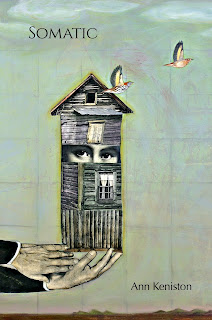
Terrapin Books Interview Series: Paige Riehl Interviews Ann Keniston

The following is the fourteenth in a series of brief interviews in which one Terrapin poet interviews another Terrapin poet, one whose book was affected by the Pandemic. The purpose of these interviews is to draw some attention to books which missed out on book launches and in-person readings. Paige Riehl talks with Ann Keniston about combining scholarship with creativity, the role of research in writing poems, the speaker's voice, syntax, and manuscript organization.

Paige Riehl:  Thank you, Ann, for discussing your powerful poetry collection Somatic with me. Somatic is organized into four sections that explore the complexities of illness, in particular the diagnosis of hysteria, through the life and treatment of Anna O, the first hysteric diagnosed by Dr. Josef Breuer in the late 1800s. You expressed your interest in the relationship between the creative and scholarly, so would you tell us a bit about those intersections in Somatic as they relate to your process of researching hysteria and Anna’s case and writing the poems? Was it a more circuitous than linear process? From where does your interest in the subject matter stem?

Ann Keniston:  The book evolved from several sources. One was the aftermath of my mother’s death; I actually published a chapbook of elegies about her (November Wasps, Finishing Line), some of which I revised—mostly pretty heavily—for Somatic. My interest in Anna O. and hysteria had several sources: I’ve always been interested in the relation of mind and body, and somehow I stumbled across a bunch of documents about Anna, from the first case study to a radically revisionary article by H.F. Ellenberger published in 1972 to a bunch of more recent feminist and other studies. Anna was kind of a blank screen for critics, it seems, who projected their own interests onto her. Before I ever thought of writing poems about this topic, I compiled a little anthology of those writings as a unit in an honors composition course I was teaching about memory. I just kept reading about Anna and hysteria and got more and more fascinated, and also a little repelled. I began writing poems about Anna, and also in her voice (or that of a more generic hysteric who was also, of course, partly me), and realized that the elegies were in fact relevant to the Anna poems, so I worked to bring those elements of the ms together.

Paige: The opening poem titled “Opaque” begins with the line “and then my mother wasn’t / there.” This poem explores the concept of absence, which is a theme in the book, and how it’s unexplainable, more defined by what it isn’t than is, although the poem ends with “unless someone chooses / a single moment / to preserve and undertake / the labor of transcribing it.”  I read those lines as relating to both the poem’s content and to you as poet, the transcriptionist laboring to illustrate and preserve these tangled and complex historical moments, including what is absent from the records. What unique opportunities does the poetic form provide when exploring this history and subject matter? Do you think that the poetic form offers an opportunity achieve a “truth” that the medical records and case studies cannot?

Ann:  I was definitely thinking about my own poetic project in that poem; in fact, this is one of the poems I revised heavily from the chapbook, so I was literally engaged in a laborious process. When I write poems, I often try to unfasten myself from linearity and narrative. Poems like “Opaque” allow me to explore contradictions and paradoxes that feel powerful to me. I often say that writing poems allows me to bring my analytic, thinking self to feelings that are powerful but inchoate, the kinds of often contradictory or self-defeating feelings that I sometimes think organize my life—and maybe everyone’s. In that context, I was especially interested that Breuer’s familiar published case history of Anna was in fact a radical revision of a shorter, unpublished one that was much less conclusive. Writing poems based on the case histories, from which I cite in often scattered ways, allowed me to further disrupt their logic, to focus on them as linguistic artifacts rather than arguments, and to expose the ways their arguments were in fact fictions constructed to support newly emerging theories. I was interested in the book in trying out different forms, both more and less coherent, again to try to get at what felt almost inexpressible, especially in terms of the complicated relation between bodily symptoms and their psychological causes.

Paige:  I keep returning to the poem “Conversion.” I so admire the intensity of the short lines, the surprising metaphors, the way the poem turns and builds upon itself: “And then I made / an actual girl, hysterical, / from husks / and scattered pages / and her dust. / I licked her lips / and then her scar, / hurt bruise, / bereaved, her / hiding place. I mean / she was a house / I squatted in.” Will you talk a little about the speaker in this poem as well as your process of determining who else would be given voice in the collection? Do some poems have a speaker whose voice blurs or overlaps with your own as poet?

Ann: Absolutely. “Conversion” talks about a hysterical figure without appropriating her body or voice. It is a kind of ars poetica: I literally had the pages of different articles scattered around me as I wrote. I’m still not exactly sure why I became so preoccupied with Anna and hysteria, though I have had some firsthand experience with psychosomatic illness (now called conversion disorder). (I was also interested in the pun: I was converting documents depicting someone with conversion disorder into a not-quite living person who was also a version of me. My scholarly work on contemporary U.S. poetry has focused a lot on elegy and the ways poems create and invoke ghostly versions of the dead.) Using Anna as a foil and adopting the kind of “hysterical” voice that I and others have associated with the operatic aria—halting, aphasic, redundant, nonlinear, but also kind of histrionic—enabled me to express things I couldn’t otherwise. So, to answer your last question directly, I’d say all the poems in the volume, no matter who narrates them, speak in versions of my voice.

Paige:  You are adept at using language and syntax to create tension in your poems that reflect and reveal the layers of historical tension—the tension between what is imagined vs. recorded, real vs. performance, between “treatment” and mistreatment. In “Concordance,” you write “each / almost-theory disproven by the newest batch / of symptoms till psychoanalysis became a curtain / filled with holes and also light.” Is effective poetic tension like that metaphor—"a curtain / filled with holes and also light?” Is building tension an intuitive process for you? Tell us about your process of creating and controlling tension and the function of disjunction in your poetry.

Ann:  I often say I’m not an especially good drafter of poems, but I’m pretty good at revision. All the poems in the volume were heavily reworked, and at times reimagined from scratch multiple times, so I’d hesitate to say that these poems were “intuitive” in the sense of having written themselves. I think tensions are what I am most interested in—the tensions you mention, and how they are evident in tonal shifts and turns. In the poems I most love (and study most intently), the process of reading the poem involves surprises. I love it when poems swerve—when they move, especially over a line or stanza break, into unexpected territory. The idea of something simultaneously torn and revelatory is really powerful for me. I had a yoga teacher who used to play a piece called something like “Light on Fish Scales” during savasana, which reminds me of Bishop’s image of iridescent fish scales in “At the Fishhouses.” The notion breakage or splintering makes something more beautiful is really powerful for me, amd that suffering allows things to be revealed that can’t be otherwise. I’ve strayed quite a bit from your question, but I think that the topics I’m most drawn to write about are ones that involve, or let me create, tensions of different kinds.

Paige:  Will you talk about the book’s structure a bit more? The book is divided into sections subtitled Elegies, Odes, and Arias. What are those forms for you and what is the effect of juxtaposing them?

Ann:  I’ve long been interested in the elegy and ode as forms. As I mentioned before, I’ve written quite a bit about elegy in my scholarly work, and was very influenced by a weeklong seminar I took on the ode at the National Humanities Center led by Susan Stewart over a decade ago and actually wrote an article on the contemporary ode afterward. I am interested in the distinctive features of these forms, but also the ways they overlap, the ways elegies can end up as praise poems  and odes can focus on unpraiseworthy entities or experiences. I kind of stumbled on the idea of the aria as a third (hysterical) mode: it seemed to me to express the kind of extremist and also performative speech a hysteric might use, and I was especially happy to see that Peter Brooks (in an article I cite from as the epigraph to Part Three) sees the operatic aria as a distinctively hysterical form. I return to the ode in the last section, entitled “Assemblage,” but differently: these poems attempt to locate a mode of praise that emerges from fragmentation and the reassembly of parts. Those poems focus direcly on actions of breakage and remaking, as the poem titles (“Profusion,” “Sutured,” “Reassembly,” “Accrual,” etc.) indicate.


Sample poem from Somatic:


Somatic


So I could let her in    
              
                            and spill

my secret animosity and

sweet, I found some other

broken girls I hadn’t known

existed till she
            
                got lost to me, lacy

wraiths I pitied first, then came

to love since all they had

were bodies and the body’s

requirements come both first 

and last. Illness is another

form of speech,
       
                    somatic, enmeshed

in flesh and manifest as symptom

and release,

                   a code

I also speak, their voices

my portion, penance, snippet.

violent or tender but

                           always loyal

since all I wanted

was not to further harm

my fragile, lost, familiar one.


                Click Cover for Amazon


Ann Keniston
 is a poet, essayist, and critic interested in the relation of the creative to the scholarly. She is the author of several poetry collections, including, most recently, Somatic (Terrapin 2020), as well as several scholarly studies of contemporary American poetry. Her poems and essays have appeared in over thirty journals, including Yale Review, Gettysburg Review, Fourth Genre, and Literary Imagination. A professor of English at the University of Nevada, Reno, where she teaches poetry workshops and literature classes, she lives in Reno.
www.annkeniston.com

Suspension (Terrapin Books, 2018) and the poetry chapbook Blood Ties (Finishing Line Press, 2014). Her poetry has appeared in numerous publications such as Artful Dodge, Crab Orchard Review, Water-Stone Review, Portland Review, and Meridian. She was a finalist for the 2017 Lindquist & Vennum Prize for Poetry with Milkweed Edition, winner of the 2012-2013 Loft Mentor Series in Poetry, and was a 2016 & 2018 Pushcart Prize nominee. She served as the Poetry Editor for Midway Journal, as poetry mentor for the Minnesota Prison Writing Workshop, and is an English faculty member at Anoka-Ramsey Community College, where she is Chair of the Two Rivers Reading Series and 2021-2022 Co-Coordinator for Minnesota State Write Like Us.
www.paigeriehl.com/


Thursday, April 14, 2022

Terrapin Interview Series: Dion O'Reilly Interviews Yvonne Zipter


The following is the eleventh in a series of brief interviews in which one Terrapin poet interviews another Terrapin poet, one whose book was affected by the Pandemic. The purpose of these interviews is to draw some attention to books which missed out on book launches and in-person readings. Dion O'Reilly talks with Yvonne Zipter about discovery in poetry, dealing with difficult topics, poetry and religion, and finding solace in poetry.

Dion O’Reilly:
Nature, or what we now call The Living World, is a prominent feature in your poetry. Do you consider yourself an eco-poet?

Yvonne Zipter: I’ve never actually thought about it, but I think that’s a fair label to apply to my work. If ecopoetry explores “the relationship between nature and culture, language and perception,” as Forrest Gander posits in The Ecopoetry Anthology (eds. Ann Fisher-Wirth and Laura-Gray Street), then it makes perfect sense to apply that term to my work. Kissing the Long Face of the Greyhound, for instance, is organized roughly as a dialogue between the natural world and humans, the intent being to show how they—we—are interrelated. But I tend to agree with Naturalist Weekly that “labels can be challenging for readers and writers. They have a tendency to limit our ability to see the world. One of the things I really appreciate about poetry is that any given poem may produce different meanings to different people. . . . Any poetry that gets you to think about your role or place in the natural world is beneficial and . . . the labels we give them are only helpful if they contribute to the joy of the audience.” That said, I would be honored to be thought of as an ecopoet.

Dion: Do you strive to take turns in your poems, what we call voltas or peripeteia? In other words, do you seek a deeper layer, what Robert Frost called surprise and what many poets call discovery?

Yvonne: For me, part of the joy of writing poetry is discovering what the poem is about as I’m writing it. That surprise or discovery, to my way of thinking, is an important component of a compelling poem, not only for me as the poet but for the reader as well. The delight I feel when an out-of the-ordinary perspective emerges regarding some ordinary thing—I want the reader to feel that delight as well. A poem for which the significance of the subject remains opaque to me is never successful. I end up trying to force a revelation, and the resulting poem feels empty, too glib, uninspired—boring. What I aim for in my poems is being able to take the reader along with me in the process of seeing something in a new way that might ordinarily be taken for granted. Well, that’s not quite true—I write for myself, for the joy of learning something I knew but didn’t know I knew. It’s only afterward that I think about the reader.

Dion: How do you feel poetry should deal with what some call, perhaps unfairly, darkness—topics like death, pain, "the slings and arrow?"

Yvonne: Pain, death, and adversity are common to every living being and are thus topics that should be universally relatable. As a poet, writing about these difficult topics has not only given me solace but has also been a way for me to find beauty and/or poignancy about some of life’s least pleasant moments. The hope is that such poems can allow readers to think about their difficult moments in a new way and/or help them process their own pain or grief. At the very least, poems on topics such as these let people know they are not alone in what they’ve been through.


However, much as with love poems, poems about pain and death are hard to write without falling into abstractions and clichés. I often have to let months or years pass before I can write a poem about something dire that has happened before I can focus on the kinds of details that will let me tell the reader “this was awful” without telling them that.

Dion: You have a few poems which could be interpreted as having a theme of religion versus spirituality—"Still Waters" and "Manners of the Flesh" come to mind. Is this a theme you grapple with?

Yvonne: Religion, in my poems, functions as a sort of shorthand—like myth, in a way—to convey a lot about a subject without having to elaborate in great detail because the themes, terms, et cetera are well-known. I think of myself as a spiritual person. When it comes to traditional religion, I consider myself to be an atheist, but I was raised going to church (three different denominations, actually—Lutheran, Methodist, and Unitarian) and my wife is Catholic, so despite my beliefs, I am nevertheless steeped in this culture. But because I use religious imagery so often in my poems, my wife sometimes teases me that I’m the worst atheist ever. “Manners of the Flesh” was actually written for a friend of mine who has struggled with his own relationship to religion, especially during the time his sister was dying, hence the ambivalence about heaven, prayer, and so on, whereas in “Still Waters” I use the terminology of religion to express my reverence for nature and the awe I often feel in its presence—in other words, as a way to put spirituality on the same plane as religion.

Dion: Danusha Lameris talks about poets having a solace and an irritant. The irritant feels broken or off-kilter and inspires them to speak. But poets also often experience a solace, a relief from that irritant. It appears that the Living World (nature) and your dogs are a solace for you. Would you say that is true? And what is your irritant?

Yvonne: You’ve hit the nail right on the head: nature, including pets, is definitely a place of refuge for me. When I’m looking at a Cooper’s hawk in flight or hugging the dog, I’m not thinking about the precarious nature of our democracy or inequities of race and class. As a kid, I immersed myself in nature, haunting the nearby creek for frogs and garter snakes, climbing trees, and chasing bumblebees and fireflies trying to catch them in a jar so I could watch them up for a while close. But as I got older, I drifted away from the natural world. There was always so much else to do—studying, reading, learning what it was to be a feminist, to be queer. But as things began to slow down a bit, with a steady job and long-term relationship, I found myself drawn to nature again.
    

As for an irritant, I have a few, from racial inequities to political skulduggery. But these irritants overwhelm me in a way that, for the most part, makes it hard for me to write poetry about them without sounding shrill and prosaic. But then, that gives me something to work toward.


Sample poem from Kissing the Long Face of the Greyhound


Osteosarcoma: A Love Poem

          —for Easton, Zooey, and Nacho


Cancer loves the long bone,
the femur and the fibula,
the humerus and ulna,
the greyhound’s sleek physique,
a calumet, ribboned with fur
and eddies of dust churned to a smoke,
the sweet slenderness of that languorous
lick of calcium, like an ivory flute or a stalk
of  Spiegelau stemware, its bowl
bruised, for an eye blink, with burgundy,
a reed, a wand, the violin’s bow —
loves the generous line of  your lanky limbs,
the distance between points A and D,
epic as Western Avenue, which never seems to end
but then of course it does, emptying
its miles into the Cal-Sag Channel
that river of waste and sorrow.
I’ve begun a scrapbook:
here the limp that started it all, here
your scream when the shoulder bone broke,
here that walk to the water dish,
your leg trailing like a length
of   black bunting. And here the words I whispered
when your ears lay like spent milkweed pods
on that beautiful silky head:
Run. Run, my boy-o,
in that madcap zigzag,
unzipping the air.

Click Cover for Amazon

Yvonne Zipter was born in Milwaukee, WI, and following sojourns on both coasts, has replanted herself firmly again in the Midwest. She lives in Chicago with her wife and a long succession of retired racing greyhounds. She is the author of the poetry collections Kissing the Long Face of the Greyhound, The Patience of Metal (a Lambda Literary Awards finalist) and Like Some Bookie God; the nonfiction books Ransacking the Closet and Diamonds Are a Dyke's Best Friend; the novel Infraction; and the nationally syndicated column "Inside Out,"which ran from 1983 to 1993. Her poems have been published widely in periodicals.
www.yvonne-zipter.com

Dion O’Reilly’s prize-winning book, Ghost Dogs, was published in February 2020 by Terrapin Books. Her poems appear in Cincinnati Review, Poetry Daily, Narrative, The New Ohio Review, The Massachusetts Review, New Letters, Journal of American Poetry, Rattle, and The Sun. She is a member of The Hive Poetry Collective, which produces podcasts and radio shows, and she leads online workshops with poets from all over the United States and Canada.
www.dionoreilly.wordpress.com


Wednesday, March 2, 2022

Terrapin Books Interview Series: Robin Rosen-Chang Interviews Diane LeBlanc

The following is the fifth in a series of brief interviews in which one Terrapin poet interviews another Terrapin poet, one whose book was affected by the Pandemic. The purpose of these interviews is to draw some attention to these books which missed out on book launches and in-person readings. Robin Rosen Chang talks with Diane LeBlanc about book design, grief in poetry, prose poems, and more.


Robin Rosen Chang: I loved The Feast Delayed, Diane. Congratulations on this gorgeous book. While reading it, I noticed what I consider a tension between the act of living and the act of grieving. On one hand, poems such as “The End of Grief” or “Last Day of September” offer the idea of hope and moving beyond grief, whereas in “Orientation,” the speaker, who is married to an astronomer, reflects about living “in a state of constant orientation.” Is acceptance of where one is oriented at a particular moment, even if it’s somewhere painful, a central concern in The Feast Delayed? Of course, this also relates to the notion of “the feast delayed.”

Diane LeBlanc: I’d love to turn that question back to you because your collection, The Curator’s Notes, particularly the title poem, reflects on the dynamic tension between living with wonder and grieving. Reflection ideally examines the past, analyzes experience, and imagines how we respond to new experiences based on the past. The tension in “Orientation” is between hyper-awareness of where I am and the confusion caused by lack of orientation, or living in rooms painted the same shade of white that blur into one another. So in a way, yes, acceptance of where one is oriented is a central concern. I wrote many of these poems between 2015 and 2020, when the U.S. political landscape shifted, science deniers influenced public policy, and I no longer understood who I was in the changing narrative of America.

Throughout the book, I explore responsibility and my place in a web of being, hoping to measure how my choices move or disrupt other strands of the web. Perhaps the feast is delayed, but the poems find agency in doing things to salvage and to disrupt.

Robin: One of my favorite poems in your collection is “Possum.” In this poem, the speaker chides herself for not checking if there were live babies in the pouch of a dead possum she found in the grass. The speaker then asks herself, “What if I rolled the possum with my foot, opened her like a purse, and rummaged through the dead to find only more dead? What plea do I answer when it’s too late to salvage the living?” This is such a powerful question. It’s about more than grief. It’s as if the speaker carries the burden not only to accept loss but also to heal the living. Could you talk about this?

Diane: I appreciate your insightful reading of this poem. Your observation may inform how readers perceive other poems in The Feast Delayed. Obviously, I wrote this poem after encountering a dead possum. No one responded to calls to remove the body, so it became an artifact of loss that I confronted almost daily when my dog and I walked around the pond. My grief for this small creature was informed by larger ecological loss. An earlier poem in the book, “Stars to Fire,” begins, “This is the year we lost stars to fire.” In “Possum” and other poems I explore the question of whether or not I have done enough, or anything, to salvage the living. I live with that same question as I witness the devastation caused by climate change. It’s another way of asking, “In what ways am I responsible for this loss?” I remember being profoundly moved by Marie Howe’s book, What the Living Do. Although I continually articulate, “I am living,” as the speaker does in the last poem of that collection, grief and responsibility to the living are inseparable.
 
Robin: You have an incredible facility with metaphors. A few standouts for me include: “Language is the velvet grenade/whose pin I keep replacing” (“Six Variations on an Accident”); “…you confessed your thoughts were razors floating in a tub” (from “Reconciliation”); and “Metaphor from a distance is my comfort” (“December Hospice”). How do you craft such inventive metaphors, and how does metaphor function throughout the book?

Diane: Thank you, and I love this question. As an undergraduate in the 1980s, I studied X.J. Kennedy’s An Introduction to Poetry in my poetry genre and writing courses. Several chapters auger into metonymy, synecdoche, and all of metaphor’s nuances. I still have and use my copy, which has deteriorated to loose pages bundled with a rubber band. Contrary to claims that poetry complicates or muddies ideas, I believe that effective figurative language brings us closer to things and ideas. I’m an embodied writer, so when I’m composing I often make gestures with my hands to understand the physicality of process, shape, and movement. That’s when metaphors develop. At other times, I write very quickly and let the language fly in all directions. Those drafts may not survive as poems, but I sometimes find ideas for metaphors that will clarify other poems. Metaphors are central to the collection for a reason I touched on above. I wrote these poems during a period of ecological, political, and personal uncertainty. Expressing the unknown through the known, which is the outcome of metaphor, was one way of grounding poems of uncertainty, loss, and hope.

Robin: Almost one-third of the collection consists of prose poems. What inspired you to write so many of the collection’s important poems in this form? Do you feel it is better suited for the material you were working with?

Diane: I write both poetry and lyric essays. Are you familiar with Annie Dillard’s essay “To Fashion a Text?” She writes that when she gave up poetry to write prose she felt as if she had “switched from a single reed instrument to a full orchestra.” Her description upset me at first because it situates poetry as a deficit genre. Then I started writing essays and understood Dillard’s contrast. But I didn’t leave poetry behind. Prose poems exist in the sweet spot where poetry and prose live together. For me, a good prose poem offers the full orchestra experience with some stunning single reed solos.

When I’m drafting, I don’t decide in advance if I’m writing poetry or prose. I let the language determine what will happen. When a poem with line breaks depends on narrative, but it’s too compressed or lyric-driven to be prose, I’ll eliminate the line breaks to see how it reads. Each of my published collections has an increasing number of prose poems until, as you observe, they comprise almost a third of the poems in The Feast Delayed. Some of the poems went back and forth several times as I experimented with how to tell a particular story. In the end, the blurring of poetry and prose emerged as the necessary form to write about orientation, loss, and transformation.
 
Robin: I visited your website and saw samples of your stunning book arts. How did you get into book arts, and how does it relate to your writing? Perhaps you might also like to comment on the artwork on the cover of The Feast Delayed.

Diane: I’m a book nerd. I love paper, font, white space, stitching, everything about books. By the time I started an MFA in creative writing, I had been writing and publishing for over 20 years and wanted new ways to use form and image in poems. I had a rare opportunity to take a course co-taught by poet and collage artist Deborah Keenan and poet and book artist Georgia Greeley. They introduced me to the basics of shape, balance, color theory, and book arts, and I’ve learned more through the Minnesota Center for Book Arts. The tactile experience of making books influences how I think about words and white space on a page. I sometimes use book form or collage to shape a poem. Several of the poems in The Feast Delayed are responses to collages I made. I wouldn’t have written the book’s final poem, “Gretel’s Campaign,” without this process. And that poem enabled me to see the book’s larger themes of personal and ecological survival.

My love of paper eventually led me to artist Molly Keenan’s paper mosaics and collages whose images of sun, moon, trees, birds and foxes and deer, and seasonal change speak to me. When I discovered “Dreaming Minnesota: December Fox,” now the cover art for The Feast Delayed, I felt immediately that the fox in mid-step against the gray-blue sky conveyed the book’s tone. And of course, foxes appear in these poems.

Sample poem from The Feast Delayed:


Click Cover for Amazon

Diane LeBlanc is a writer, teacher, and book artist with roots in Vermont, Wyoming, and Minnesota. Books include The Feast Delayed (Terrapin Books, 2021) and four poetry chapbooks. Poems and essays appear in Bellingham Review, Cimarron Review, Green Mountains Review,  Mid-American Review, Sweet, and other journals. Diane is a certified holistic life coach with emphasis in creative practice. She directs the writing program and teaches at St. Olaf College in Northfield, Minnesota. www.dianeleblancwriter.com.


Robin Rosen Chang is the author of the full-length poetry collection, The Curator's Notes (Terrapin Books, 2021). Her poems appear in Michigan Quarterly Review, The Journal, Diode, Verse Daily, Poet Lore, Valparaiso Poetry Review, Cortland Review, and other journals. They have also been included in Terrapin Books’ A Constellation of Kisses and The Strategic Poet. She is the recipient of the Oregon Poetry Association's Fall 2018 Poets' Choice Award, an honorable mention for Spoon River Poetry Review's 2019 Editors' Prize, and a 2020 and 2021 Pushcart nominee. She has an MFA from the Program for Writers at Warren Wilson College. 
www.robinrosenchang.com

Tuesday, February 8, 2022

Terrapin Books Interview Series: Christine Stewart-Nunez Interviews Emily Franklin

Here's the second interview in this series. I hope you'll love it as much as I do! This series is all about poets supporting poets.
 

Christine Stewart-Nuñez: I know you are a prolific storyteller and an author of many novels. As I read Tell Me How You Got Here, I kept looking for an overarching narrative, but the collection refused me in the most satisfying way. I enjoyed swinging from poem to poem by collecting imagery and emotional impressions. Can you tell us more about what the genre of poetry opens for you that novels may not?

Emily Franklin: I started life as a poet, publishing in high school. In college I worked with great poets (Tom Lux, Kimiko Hahn) and thought for sure I would keep writing poetry while I worked numerous other jobs (cook, construction, teacher) but wound up being pulled into fiction writing. It made sense since I wrote mostly narrative poems. After years in the fiction world, I found lines of poetry coming back to me. For me, writing poetry is about sharing the biggest truth in the smallest form. I felt relief in trimming words and focusing on line breaks, really paring back in order to tell what needed to be told.

Christine: As a child, I maintained collections: knicknacks, earrings, dolls, stickers. Having moved a lot as an adult, I've let go of this tendency--with books a hearty exception. Tell Me How You Got Here appeals to my love of things because so many objects shimmer with meaning. Can you tell us more about your relationship to artifacts?

Emily: I’ve always been fascinated by what people (or crows!) collect. What people keep is also who they are or markers of what happened to them. Having moved a ton growing up, what we keep has special significance to me. I wrote Tell Me How You Got Here considering the amassing we do—and the sloughing off of items either when children grow out of things, or when a house floods (which happened to us), or what remains for people to sort through after someone dies. I like the record keeping of objects, and the freedom that comes from letting some of those objects or what they represent go.

Christine: I'm fascinated with the methods poets use to arrange the poems in their books. How did the order for Tell Me How You Got Here come about?

Emily: First of all, I had help. It’s tough for me to see the best order. That said, I knew "Japan, Autumn" would start the collection and that "Tell Me How You Got Here" would be the final poem. I thought about what I was asking of the reader, what topics I wanted to introduce right off the bat to let them know what the collection is about—memories (not just what we remember but how and who), the acts of gathering and letting go (both of objects and people), and ultimately what we are left with (in this case, a parrot who is loved, who leaves and returns). I think about how I came to be where I am and that’s what I’m asking the reader to examine—how you got here and—the last lines of wishing we knew how long anything or anyone can stay.

Christine: Your work in this collection is unabashedly sensual, and I adore the attention you give to food. Tell us more about your love affair with cooking.

Emily: I do love food. I also really like to know what and how other people eat. The how can tell you a lot. So I’ve always written about food and eating. In one of my life detours, I became a cook on boats and—years later—wrote a cookbook/memoir about cooking with and for my four children.

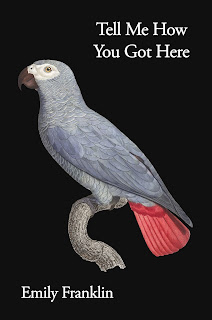
Christine: I admire how the titular poem, "Tell Me How You Got Here," concludes the book, and how the cover image is of an African Grey Parrot--the subject of that poem. And yet, I found that I wanted to substitute the "you" for the word "grief," since loss threads the book. Will you tell us more about the role grief plays in your writing process? 

Emily: I write a lot about grief, even when I don’t think I’m writing about grief. That’s how grief works, I guess. The way I live is to find and hold daily joys while always knowing part of being alive is figuring out how to live with and carry sorrow.
 

                                                         Click Cover for Amazon

Sample Poem from Emily's Book:


In Praise


No one praises the nostril.
Overshadowed by tufted nastiness of age,
crusted muck of childhood. Where is the joy
of newborn neck, smell of milky morning,
inevitable scent of your mother’s/father’s/grandfather’s/son’s
lotion/cologne/maple syrup/pomade?
Could you spend a few moments thinking
of those once tiny nostrils—now larger,
that we learned not to stick things in,
haunted by what has gone but that we still want—
that mother and her lotion,
the high school boy who drowned—
bourbon soaked, in the reeds
what was that smell he had?
The betrayal of age is the smell.

Let us praise nostrils for what they are—
time travel, gateways to every meal, place.
This is how you bring back the dead.
I’ll cast no judgment if I find you hunched over
a bottle of vanilla extract or your son’s sweatshirt or
your grandfather’s gardening gloves.
There will be mourning for empty biscuit tins,
trowels still woozy with dirt, each salt-and snow-stained boot
the size of your palm, for even the dishrag’s rank and pong,
box of undone slithering bowties, swaddling blankets
that could not possibly hold the nostril’s gaze.
Afford the olfactory a moment,
give thanks for those gateways, consider
the space carried each day in the center of us.


Emily Franklin's work has been published in The New York Times, The Boston Globe, Guernica, The Cincinnati Review, New Ohio Review, Blackbird, and Sixth Finch among other places as well as Long-Listed for the London Sunday Times Short Story Award, featured on National Public Radio, and named notable by the Association of Jewish Libraries. Her debut poetry collection, Tell Me How You Got Here, was published in 2021 by Terrapin Books. Her novel Becoming Isabella, a novel of Isabella Stewart Gardner, is forthcoming from Godine Books.
http://emilyfranklin.com

Christine Stewart-Nuñez, South Dakota’s poet laureate from 2019-2021, is the author and editor of several books, including The Poet & The Architect (Terrapin Books, 2021), South Dakota in Poems: An Anthology (2020), Untrussed (2016) and Bluewords Greening (Terrapin Books, 2016), winner of the 2018 Whirling Prize. Her poetry has been the basis for international, cross-artistic collaborations with colleagues in music, dance, visual art, and architecture. She recently joined the faculty of arts at the University of Manitoba, where she teaches in the women’s and gender studies program. christinestewartnunez.com  

Please visit the Terrapin Bookstore for these and other Terrapin Books.


Wednesday, February 2, 2022

Terrapin Books Now Open for Submissions of Full-length Poetry Manuscripts

We will be open for submissions of full-length poetry manuscripts from January 24 thru February 28.

We plan to select 2-4 manuscripts each submission period.
​All submissions must go through Submittable.
Please read our FAQs page before submitting.
Any questions, please use the email address or the Contact Form on the Contact page.
submit
Guidelines:
A manuscript of approximately 40-55 poems​. This will produce a book of approximately 90-110 pages. (Please note that your book will always be more pages than your manuscript. Page count for the book includes poems, front and back matter, blank pages, and section dividers).

Include contact information on title page (we do not read anonymous submissions)

One inch margins all around

Include Table of Contents

Include page numbers


Include Acknowledgments Page
  • Please include a list of poems and journal titles rather than just a list of journal titles. Format as a list, not as a paragraph.
  • Please note that we allow a maximum of 6 poems from a previously published chapbook. Regardless of the number of chapbooks, it’s no more than 6 chapbook poems. Poems previously published in a chapbook should be indicated as such on the Acknowledgments page. Include title of poem and title of chapbook.
In cover letter area include a brief bio and a 4-6 sentence description of your manuscript—in your own words, not a blurb

We recommend that 25-50% of the poems have been previously published. More than that is fine.

Simultaneous submission is acceptable but please immediately withdraw your manuscript if it's accepted elsewhere.

Please note that there is a minimal $12 reading fee to help cover our costs.

If you are resubmitting a manuscript, please explain in your cover letter how you revised it.

​We strongly suggest that you peruse at least one book from Terrapin Books before submitting. We suggest that you peruse the work of any press before you submit.


​Please note that at this time we are unable to accept manuscripts from outside of the US.

***************************************************
Terrapin Books is committed to publishing outstanding books of poetry by outstanding poets. We intend to fully support our poets. We will edit your manuscript and work with you on revisions. We expect our poets to actively engage in promoting their books. We require our poets to maintain a dedicated website and to be a member of Facebook.

Our books are 6 x 9, paperback, perfect bound, color cover, with printed spine (poet's name, title, press).

We are committed to publishing accepted titles within six to ten months of acceptance. We do not maintain a long list of books-in-waiting.

We offer a standard contract, a generous number of author copies, a substantial discount on additional copies purchased by the author, and an annual royalty payment.

********************************************************

Trish Hopkinson interviews me (Diane Lockward) about my new craft book, The Strategic Poet; the selection/publication process at Terrapin Books; and Terrapin’s current call for submissions of full-length poetry manuscripts. Get a behind-the-scenes look into Terrapin Books.
 

Thursday, January 27, 2022

Terrapin Books Interview Series: Yvonne Zipter Interviews Heather Swan

I've been feeling bad for poets whose books were released during the Pandemic, poets whose book launches were cancelled or never scheduled, poets who haven't been able to do in-person readings. I asked myself, Aside from buying lots of books, what could I do, especially for my own Terrapin poets? So I devised an idea for an interview series. I invited all of my Terrapin poets to select one poet whose book had come out during the Pandemic. They were invited to choose a poet whose book they'd read or wanted to read and then to come up with five questions for that poet to respond to. The response was wonderful! Thirteen poets offered to do a Q&A. Some of these were poets with a Pandemic book themselves but some were poets without a Pandemic book. Lots of generosity among my poets! Yvonne Zipter was the first Terrapin poet to volunteer; she chose to interview Heather Swan about her Terrapin book A Kinship with Ash.

Yvonne was also the first poet to complete her interview. Here is that Q&A.

Yvonne: With both of your parents artists—your father a painter, your mother a potter—were there ways that being surrounded by art influenced your work as a writer, in particular your poetry?

Heather: Growing up in studios with people who turned ideas into images made of paint and clay certainly affected me. I understood metaphor and the importance of art so intrinsically, it never occurred to me that others did not understand the world in that way. My life was filled with art and music and stories. My mother's craft required so much (literal) centering and concentration as well as trust in the process, like writing poems does. Everyone around me made things in order to make sense of our world or to comment on it. I learned to make pottery and sculpt and paint, but I also wrote everything down. I recorded images and thoughts in journals as a child. My writing now is filled with visual imagery and, I hope, layers of meaning that one could discover in a painting.

Yvonne: Your love of nature is evident throughout A Kinship with Ash. Have you always loved nature? From where does this appreciation spring?

Heather: I feel like I have always been a part of the natural world. I spent so much of my time outside as a little girl. The studios where my mother and father worked were luckily near spaces I could explore with my dog. I moved from the prairies and woodlands of the Midwest to Colorado where I lived in the mountains. Later we moved again to a town on the east coast by the ocean. Because I moved so often, my human friendships didn't last long, but my dog was a constant companion with whom I explored these landscapes and this allowed a deep connection to the birds, the insects, and the land. All the beings we encountered in those spaces led interesting and important lives and spoke in languages I didn't understand, but recognized as valuable and mysterious.

Yvonne: A number of the poems in this collection grapple with the effects of pesticides and climate change. They are all both heartbreaking and beautiful. What does writing such poems afford you?

Heather: The experience of loving this beautiful, fragile, miraculous planet at this historical moment also means being in touch with enormous grief as so many species are going extinct, as forest after forest is being killed, as fish are struggling to survive in toxic waters, as frogs and insects are disappearing. When I write, it is part elegy, part plea. When I write, I want to remember that while so much is being lost there is also so much to be grateful for. I hope that my poems are an invitation to readers to pay attention to the outrageous beauty and vast number of different intelligences out there as well as to question our impact on the world.

Yvonne: Your sweet motherhood poems also showcase your love of nature. My sense is that this entwining is part of what fuels your anxiety about the state of our world. Can you elaborate on this?

Heather: Funny, this question made me tear up. Yes, of course. I am a parent and a teacher. My children have grown up on trails, in trees, in canoes spotting birds, insects, and frogs. A part of their community. They ache knowing so much of what they love is at risk. I invite my students to connect with each other and the planet, so they will be invested in the work of care. I think all the time about the next generations. Will polar bears still exist? Will the oldest trees survive? Will the coral reef thrive? I want so much to be a responsible ancestor, not just to my children, but to all humans and non-humans. I would like my work to offer an invitation to intimacy with the earth and also hope that we can change things for the better.

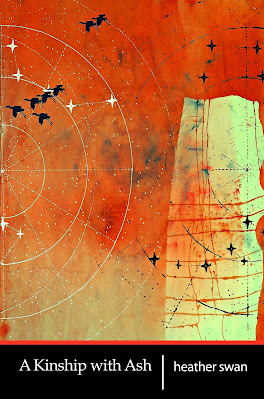
Yvonne: The cover of your book is beautiful and evocative, with various ways to interpret its relationship to the book. Can you discuss the genesis of this piece of art becoming your cover and how it illuminates the poems within?

Heather:
Emily Arthur and I met when we served together on a panel on Earth Day that basically asked what art is saying about the planet right now. Emily's work immediately seized my attention. Her prints depict ghost landscapes, places of cultural and natural erasure, while also serving to honor and revive the missing stories of her Cherokee ancestors. For a variety of reasons, these images exploring loss and survival after great violence resonated with me, on both a personal and global level. When I completed my manuscript, I knew that I wanted to ask Emily if I could use her work on the cover. I am so honored she said yes. The colors of the print on the cover hint at heat and ash as birds migrate across the image with the help of the stars. But how has their home changed? Is there still a home? Emily Arthur's sense of home is complicated by the removal of her people and the species eradicated by this process. Her work, I think, holds both sorrow and strength. I hope my poems, too, can allow someone to feel the loss, but also to remember the beauty and the hope there still is for renewal and recovery.

                                                             Click Cover for Amazon


Sample poem from Heather's book:


Rabbit

After a long numbness, I wake
and suddenly am noticing everything,
all of it piercing me with its beautiful,
radical trust: the carpenter bee tonguing
the needle of echinacea believing
in their sweetness, the exuberance
of an orange daylily unfolding itself
at the edge of the street, and the way
the moss knows the stone, and the stone
accepts its trespass, and the way the dog
on his leash turns to see if I’m holding on,
certain I know where to go. And the way
the baby rabbit—whose trembling ears
are the most delicate cups—trusts me,
because I pried the same dog’s jaw
off his hips, and then allows me to feed him
clover when his back legs no longer work,
forcing me to think about forgiveness
and those I need to forgive, and to hope
I am forgiven, and that just maybe
I can forgive myself. This unstoppable,
excruciating tenderness everywhere inviting
us, always inviting. And then later, the firefly
illuminating the lantern of its body,
like us, each time we laugh.


Heather Swan is a poet, nonfiction writer, and teacher. Her chapbook The Edge of Damage won the Wisconsin Fellowship of Poets Award. Her poetry has appeared in journals such as Poet Lore, Cold Mountain Review, Phoebe, The Raleigh Review, and Midwestern Gothic. Her nonfiction has appeared in Aeon, Belt Magazine, Catapult, Edge Effects, ISLE, and Minding Nature. Her book Where Honeybees Thrive: Stories from the Field won the Sigurd F. Olson Nature Writing Award. She has been the recipient of an Illinois Arts Council Poetry Fellowship Award, the Martha Meier Renk Fellowship, and the August Derleth Award for Poetry. She teaches writing and environmental literature at the University of Wisconsin-Madison, and she is a beekeeper.


Yvonne Zipter is the author of the poetry collections Kissing the Long Face of the Greyhound (Terrapin Books, 2020), The Patience of Metal (a Lambda Literary Award Finalist), and Like Some Bookie God. Her poems have appeared in numerous periodicals, including Poetry, Southern Humanities Review,  Bellingham Review, and Spoon River Poetry Review. Her published poems are currently being sold individually in two vending machines in Chicago to raise money for the nonprofit arts organization Arts Alive Chicago. She is also the author of the Russian historical novel, Infraction (Rattling Good Yarns Press, 2021) and the nonfiction books Diamonds Are a Dyke’s Best Friend and Ransacking the Closet. She is retired from the University of Chicago Press, where she was a manuscript editor.

Please visit the Terrapin Bookstore for these and other Terrapin Books.


Related Posts Plugin for WordPress, Blogger...