Showing posts with label somatic. Show all posts

Wednesday, June 29, 2022

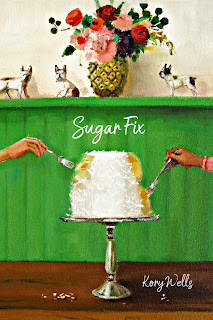
Terrapin Books Interview Series: Ann Keniston Interviews Kory Wells


The following is the sixteenth in a series of brief interviews in which one Terrapin poet interviews another Terrapin poet, one whose book was affected by the Pandemic. The purpose of these interviews is to draw some attention to books which missed out on book launches and in-person readings. Ann Keniston talks with Kory Wells about using a central metaphor as an organizing principle, the role of facts and stories in a collection, and the arc of a poetry collection.

Ann Keniston: Sugar is central to your collection, as the book title, Sugar Fix, makes clear. Yet sugar seems to mean different things—at times it’s aligned with desire and pleasure, and at others it’s something to be resisted, an “urge,” in one poem, that the speaker is “unlearning.” Can you talk a bit about how you understand sugar in the collection? How did it become central to the collection? Did its meaning change or become more complex as you worked on the manuscript?

Kory Wells: It’s hard to believe now, but I didn’t know that sugar was going to be such a central motif of the collection for quite some time. I knew I was writing about identity and connection and love, and that I was witnessing to the power of story and memory. I also knew I wanted to incorporate a wider sense of history and social context. But it wasn’t until I wrote “Due to Chronic Inflammation,” which interweaves the speaker’s addiction to sugar with America’s addiction to gun violence, that the bells went off in my head: I can’t tell my story without talking about sugar: red velvet cake, sugar sandwiches, Dairy Queen, marshmallow pies. My ancestors even lived at a place called Sugar Fork! Sugar represents many factual details of my family history. But more than that, for me sugar represents longing: my longing for romance, yes, but more than that, for kinship and connection—even across time and the troubling aspects of our country’s history and present.


Keniston: I noticed that you use the word “fact” several times in the course of the book, often in relation to something you want to amplify or contradict. And then the word “story” also recurs. Can you talk about how you see the relation between those two terms? Are stories a way to correct so-called facts or to amplify or complicate them? Given that many stories are associated with family, especially a grandmother figure, do these stories have the weight of truth, perhaps emotional truth? Or can they also be misleading or deceptive?

Wells: Thanks so much for this question! This tension between stories and facts dominates our entire socio-political climate, right? It’s common to hear someone say, “We need all the facts” and believe those facts tell THE story. But we don’t often hear, “We need all the stories.” And even if we did, how often are we truly open to hearing someone whose story we think we may not like or agree with?

I think that’s what Sugar Fix is attempting to champion, in its own small way—the idea that we need all the stories, and that the best, fullest stories dissolve the line between us and them.

A major thread of this book comes from my obsession with how my family’s oral history jibes—or fails to jibe—with facts I learned from genealogical research and DNA testing. In my experience, the stories my grandmother and other family members told definitely captured some of the truth, and that still matters deeply, even if it’s not the full story.

The facts are that my family traces back to the Catawba, and before that a Saponi tribe, but hearing the story that I was descended from Cherokee who narrowly escaped the Trail of Tears still shapes the empathy and connection I feel today.

The facts are that I’m descended from a woman who was arrested for dancing and masquerading as a man in Philadelphia in 1703. The facts are also that I am of African descent. I can’t say these facts—which are relatively new to me—are life-changing. But they expand my story, and that’s part of what I was writing toward in these poems. How I include new facts in my story, my own self-reckoning, particularly as a person who tries to be intentional about connection and allyship, is, to me, significant.  


Keniston: I was really interested in your use of the word “cousin,” first in relation to the possibly-but-probably-not blood relative Gypsy Rose Lee and then as an addressee in several other poems. It seems like part of the book’s project is to destabilize conventional lineage-based ideas of family, as well as race and history. Can you talk a bit about how you extend the notion of family, maybe especially in relation to your use of form, including renewable forms like the villanelle, sonnet, and ghazal? To put it another way, what is the relation of the theme of family to that of political reimagining in the book?

Wells: Oh, thank you for noticing how I address cousins! Perhaps I’m intrigued by the idea of consanguinity because I’m an only child. Or because I grew up in a small town, where people are more connected than you realize, and you have to be careful you don’t bad-mouth your new friend’s second cousin. Or perhaps, amid our national divisiveness, I’m reaching, reaching for common threads.

At any rate, I think my use of form is, in one sense, a nod to the various rhythms that have shaped me as a Southerner with Appalachian roots: a rich storytelling tradition, the cadence of Southern and Appalachian speech, the rhythms of old time and classic country music, the spread of a Sunday soul food dinner, the particularly Southern customs of hospitality and manners. All of these things ignite my sense of kinship.

I’d be remiss if I didn’t acknowledge that, as someone who came to poetry by way of computer science, I have occasionally felt like an outsider to the literary community. I want to be clear: I do feel a deep belonging much of the time—I have so much gratitude for the kinship of fellow writers! But let’s face it—there are a lot of poets, and it can be easy to feel overlooked. By employing poetic form, I think I am, in a small way, acknowledging literary tradition and saying, “I want to belong.”


Keniston: Can you talk about the shape of the book? Your last section title is “As I Already Said, Sugar” and circles back to some of the themes of the first section. Yet things seem different by the end of the manuscript: several of the poems look forward to an uncertain future rather than back to childhood. Can you talk about how you imagined the arc of the book?

Wells: I enjoy reading poetry collections that have a definite arc, so I started thinking about that with my manuscript early on. Initially, for a few years while I was working on the manuscript, I used a James Dickey quatrain—the last lines of “Into the Stone” —divided into four sections as an organizational device. One of my early readers, a novelist friend, said it was “impenetrable,” so that’s when I backed up and started looking at excerpting my own words as section titles. But the Dickey excerpt was still in my mind: this idea of how the dead “have the chance in my body,” and how that interweaves with stories and what we carry, and the comfort of knowing and being known.

In revision, I also faced the fact that my grandmother, who is a definite character in my earlier chapbook, Heaven Was the Moon (March Street Press) and who I thought I was sort of done with, deserved a greater role in framing the collection. “Untold Story,” which is the first poem in section one, and “When the Watched Pot Boils,” the first poem in the final section, were both written relatively late in the process and reflect how I finally came to understand this collection as being all about story.


Sample poem from Sugar Fix


He drove a four-door Chevy, nothing sexy,
but I'd been thinking of his mouth for weeks


when he finally called me up
and asked if I'd like to get
some ice cream.

I was full from supper and my
thighs sure didn't need it, but
I've never struggled with

priorities. That Dairy Queen
had gone downhill even then—
bright red logo faded like a movie star
who's kissed away all her lipstick—
but it still had a drive-in, and he
knew how I was about nostalgia

and sugar. This is how a place
became our song. We parked
under the sun-bleached canopy
and I leaned over him
pretending to read the menu.
Then at his rolled-down window
we confessed our desires
more or less into thin air,
which now that I think about it
sounds a little like church
and believe you me

I'd been praying about him.
How I wanted him.
How if I couldn't have him,
I wanted to be free
of want. Do you get that way
sometimes? Where all
you can think about is
chocolate, chocolate, chocolate,
or in my case man, man,
that man. The bench seat
of his Chevy became a pew,
the space between us palpable
as the early summer humidity.

I kept telling myself
it's just an ice cream,
but even then I knew
love is a kind of ruin.
When those cones arrived
so thick and voluptuous,
I almost blushed to open my mouth
before him, expose my eager tongue.

                                    
                                       Click Cover for Amazon


Kory Wells is the author of Sugar Fix, from Terrapin Books. Her writing has been featured on The Slowdown podcast and recently appears in The Strategic Poet, The Literary Bohemian, Poetry South, Peauxdunque Review, and elsewhere. A former software developer who now nurtures connection and community through the arts, storytelling, and advocacy, Kory mentors poets across the nation through the from-home program MTSU Write and has served as the poet laureate of Murfreesboro, Tennessee. 


www.korywells.com


Ann Keniston is a poet, essayist, and critic interested in the relation of the creative to the scholarly. She is the author of several poetry collections, including, most recently, Somatic (Terrapin, 2020), as well as several scholarly studies of contemporary American poetry. Her poems and essays have appeared in over thirty journals, including Yale Review, Gettysburg Review, Fourth Genre, and Literary Imagination. A professor of English at the University of Nevada, Reno, where she teaches poetry workshops and literature classes, she lives in Reno, Nevada.
www.annkeniston.com


Thursday, May 19, 2022

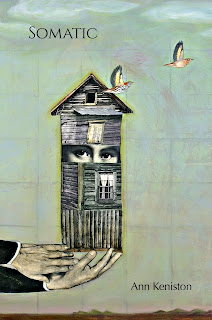
Terrapin Books Interview Series: Paige Riehl Interviews Ann Keniston

The following is the fourteenth in a series of brief interviews in which one Terrapin poet interviews another Terrapin poet, one whose book was affected by the Pandemic. The purpose of these interviews is to draw some attention to books which missed out on book launches and in-person readings. Paige Riehl talks with Ann Keniston about combining scholarship with creativity, the role of research in writing poems, the speaker's voice, syntax, and manuscript organization.

Paige Riehl:  Thank you, Ann, for discussing your powerful poetry collection Somatic with me. Somatic is organized into four sections that explore the complexities of illness, in particular the diagnosis of hysteria, through the life and treatment of Anna O, the first hysteric diagnosed by Dr. Josef Breuer in the late 1800s. You expressed your interest in the relationship between the creative and scholarly, so would you tell us a bit about those intersections in Somatic as they relate to your process of researching hysteria and Anna’s case and writing the poems? Was it a more circuitous than linear process? From where does your interest in the subject matter stem?

Ann Keniston:  The book evolved from several sources. One was the aftermath of my mother’s death; I actually published a chapbook of elegies about her (November Wasps, Finishing Line), some of which I revised—mostly pretty heavily—for Somatic. My interest in Anna O. and hysteria had several sources: I’ve always been interested in the relation of mind and body, and somehow I stumbled across a bunch of documents about Anna, from the first case study to a radically revisionary article by H.F. Ellenberger published in 1972 to a bunch of more recent feminist and other studies. Anna was kind of a blank screen for critics, it seems, who projected their own interests onto her. Before I ever thought of writing poems about this topic, I compiled a little anthology of those writings as a unit in an honors composition course I was teaching about memory. I just kept reading about Anna and hysteria and got more and more fascinated, and also a little repelled. I began writing poems about Anna, and also in her voice (or that of a more generic hysteric who was also, of course, partly me), and realized that the elegies were in fact relevant to the Anna poems, so I worked to bring those elements of the ms together.

Paige: The opening poem titled “Opaque” begins with the line “and then my mother wasn’t / there.” This poem explores the concept of absence, which is a theme in the book, and how it’s unexplainable, more defined by what it isn’t than is, although the poem ends with “unless someone chooses / a single moment / to preserve and undertake / the labor of transcribing it.”  I read those lines as relating to both the poem’s content and to you as poet, the transcriptionist laboring to illustrate and preserve these tangled and complex historical moments, including what is absent from the records. What unique opportunities does the poetic form provide when exploring this history and subject matter? Do you think that the poetic form offers an opportunity achieve a “truth” that the medical records and case studies cannot?

Ann:  I was definitely thinking about my own poetic project in that poem; in fact, this is one of the poems I revised heavily from the chapbook, so I was literally engaged in a laborious process. When I write poems, I often try to unfasten myself from linearity and narrative. Poems like “Opaque” allow me to explore contradictions and paradoxes that feel powerful to me. I often say that writing poems allows me to bring my analytic, thinking self to feelings that are powerful but inchoate, the kinds of often contradictory or self-defeating feelings that I sometimes think organize my life—and maybe everyone’s. In that context, I was especially interested that Breuer’s familiar published case history of Anna was in fact a radical revision of a shorter, unpublished one that was much less conclusive. Writing poems based on the case histories, from which I cite in often scattered ways, allowed me to further disrupt their logic, to focus on them as linguistic artifacts rather than arguments, and to expose the ways their arguments were in fact fictions constructed to support newly emerging theories. I was interested in the book in trying out different forms, both more and less coherent, again to try to get at what felt almost inexpressible, especially in terms of the complicated relation between bodily symptoms and their psychological causes.

Paige:  I keep returning to the poem “Conversion.” I so admire the intensity of the short lines, the surprising metaphors, the way the poem turns and builds upon itself: “And then I made / an actual girl, hysterical, / from husks / and scattered pages / and her dust. / I licked her lips / and then her scar, / hurt bruise, / bereaved, her / hiding place. I mean / she was a house / I squatted in.” Will you talk a little about the speaker in this poem as well as your process of determining who else would be given voice in the collection? Do some poems have a speaker whose voice blurs or overlaps with your own as poet?

Ann: Absolutely. “Conversion” talks about a hysterical figure without appropriating her body or voice. It is a kind of ars poetica: I literally had the pages of different articles scattered around me as I wrote. I’m still not exactly sure why I became so preoccupied with Anna and hysteria, though I have had some firsthand experience with psychosomatic illness (now called conversion disorder). (I was also interested in the pun: I was converting documents depicting someone with conversion disorder into a not-quite living person who was also a version of me. My scholarly work on contemporary U.S. poetry has focused a lot on elegy and the ways poems create and invoke ghostly versions of the dead.) Using Anna as a foil and adopting the kind of “hysterical” voice that I and others have associated with the operatic aria—halting, aphasic, redundant, nonlinear, but also kind of histrionic—enabled me to express things I couldn’t otherwise. So, to answer your last question directly, I’d say all the poems in the volume, no matter who narrates them, speak in versions of my voice.

Paige:  You are adept at using language and syntax to create tension in your poems that reflect and reveal the layers of historical tension—the tension between what is imagined vs. recorded, real vs. performance, between “treatment” and mistreatment. In “Concordance,” you write “each / almost-theory disproven by the newest batch / of symptoms till psychoanalysis became a curtain / filled with holes and also light.” Is effective poetic tension like that metaphor—"a curtain / filled with holes and also light?” Is building tension an intuitive process for you? Tell us about your process of creating and controlling tension and the function of disjunction in your poetry.

Ann:  I often say I’m not an especially good drafter of poems, but I’m pretty good at revision. All the poems in the volume were heavily reworked, and at times reimagined from scratch multiple times, so I’d hesitate to say that these poems were “intuitive” in the sense of having written themselves. I think tensions are what I am most interested in—the tensions you mention, and how they are evident in tonal shifts and turns. In the poems I most love (and study most intently), the process of reading the poem involves surprises. I love it when poems swerve—when they move, especially over a line or stanza break, into unexpected territory. The idea of something simultaneously torn and revelatory is really powerful for me. I had a yoga teacher who used to play a piece called something like “Light on Fish Scales” during savasana, which reminds me of Bishop’s image of iridescent fish scales in “At the Fishhouses.” The notion breakage or splintering makes something more beautiful is really powerful for me, amd that suffering allows things to be revealed that can’t be otherwise. I’ve strayed quite a bit from your question, but I think that the topics I’m most drawn to write about are ones that involve, or let me create, tensions of different kinds.

Paige:  Will you talk about the book’s structure a bit more? The book is divided into sections subtitled Elegies, Odes, and Arias. What are those forms for you and what is the effect of juxtaposing them?

Ann:  I’ve long been interested in the elegy and ode as forms. As I mentioned before, I’ve written quite a bit about elegy in my scholarly work, and was very influenced by a weeklong seminar I took on the ode at the National Humanities Center led by Susan Stewart over a decade ago and actually wrote an article on the contemporary ode afterward. I am interested in the distinctive features of these forms, but also the ways they overlap, the ways elegies can end up as praise poems  and odes can focus on unpraiseworthy entities or experiences. I kind of stumbled on the idea of the aria as a third (hysterical) mode: it seemed to me to express the kind of extremist and also performative speech a hysteric might use, and I was especially happy to see that Peter Brooks (in an article I cite from as the epigraph to Part Three) sees the operatic aria as a distinctively hysterical form. I return to the ode in the last section, entitled “Assemblage,” but differently: these poems attempt to locate a mode of praise that emerges from fragmentation and the reassembly of parts. Those poems focus direcly on actions of breakage and remaking, as the poem titles (“Profusion,” “Sutured,” “Reassembly,” “Accrual,” etc.) indicate.


Sample poem from Somatic:


Somatic


So I could let her in    
              
                            and spill

my secret animosity and

sweet, I found some other

broken girls I hadn’t known

existed till she
            
                got lost to me, lacy

wraiths I pitied first, then came

to love since all they had

were bodies and the body’s

requirements come both first 

and last. Illness is another

form of speech,
       
                    somatic, enmeshed

in flesh and manifest as symptom

and release,

                   a code

I also speak, their voices

my portion, penance, snippet.

violent or tender but

                           always loyal

since all I wanted

was not to further harm

my fragile, lost, familiar one.


                Click Cover for Amazon


Ann Keniston
 is a poet, essayist, and critic interested in the relation of the creative to the scholarly. She is the author of several poetry collections, including, most recently, Somatic (Terrapin 2020), as well as several scholarly studies of contemporary American poetry. Her poems and essays have appeared in over thirty journals, including Yale Review, Gettysburg Review, Fourth Genre, and Literary Imagination. A professor of English at the University of Nevada, Reno, where she teaches poetry workshops and literature classes, she lives in Reno.
www.annkeniston.com

Suspension (Terrapin Books, 2018) and the poetry chapbook Blood Ties (Finishing Line Press, 2014). Her poetry has appeared in numerous publications such as Artful Dodge, Crab Orchard Review, Water-Stone Review, Portland Review, and Meridian. She was a finalist for the 2017 Lindquist & Vennum Prize for Poetry with Milkweed Edition, winner of the 2012-2013 Loft Mentor Series in Poetry, and was a 2016 & 2018 Pushcart Prize nominee. She served as the Poetry Editor for Midway Journal, as poetry mentor for the Minnesota Prison Writing Workshop, and is an English faculty member at Anoka-Ramsey Community College, where she is Chair of the Two Rivers Reading Series and 2021-2022 Co-Coordinator for Minnesota State Write Like Us.
www.paigeriehl.com/


Related Posts Plugin for WordPress, Blogger...