Showing posts with label poetry. Show all posts

Friday, June 10, 2022

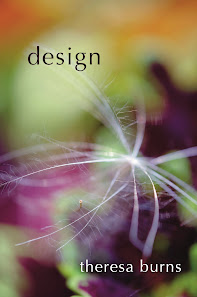
Terrapin Books Interview Series: Kory Wells Interviews Theresa Burns

Click Cover for Amazon
 

The following is the fifteenth in a series of brief interviews in which one Terrapin poet interviews another Terrapin poet. In this interview, Kory Wells talks with Theresa Burns about her use of color, the role of gardening and humor in her book, running a reading series, and persistence in getting a manuscript published.

Kory Wells: One of the first things to strike me about Design is how color infuses this collection. The epigraphs introduce white and green through the words of Frost and Lorca, and soon the reader is drenched in color: the yellow of a magnolia goldfinch, a hosta "blue as a lung," turquoise storefronts, the gray-greens of dreams, a burgundy dress, and so on. You even have several poems with color in the title—“Green," "Embarrassed by Orange," and "The New Black"—the latter of which I want to talk more about later!

So I really want to know: Is color as important to Theresa Burns the person as a whole as it is to Theresa Burns the poet? For example, what colors are in your home? Do your rooms mostly share a palette, or do they differ wildly? Do you dress in bright colors?

Theresa Burns: I love your question about color! It is important to me, and I think it's become more so as I've gotten older. It's probably rooted both in my kids' enthusiasms when they were young and also what excites me in the landscape.

When my daughter was a toddler and we asked what her favorite color was, she genuinely couldn't decide. "I love all the colors," she'd say, helplessly. (Though I think she's now settled on yellow.) The older I get, the more I'm with her on this. Why do we need to choose? My son, when he was young, loved purple most, then orange. The poem "Embarrassed by Orange" is about him helping me get over my adult need to push color away, blunt it somehow; he gets me to share his unabashed joy in it.

Color has a huge psychological impact on me. If I'm feeling a little depressed or dulled, I run out to find some orange to bring into the house. Orange tulips, a bowl of tangerines. And everyone in my house knows that if they spot an American goldfinch at the feeder, I must be summoned immediately. So colors make their way into the book, too.

Kory: The patterns in your poems are not only emotional—you also deftly layer nature with the made world, with relationships, with identity, with memory. I don’t mean to imply that a lot of the poems in Design are set in a garden…they’re not…and yet I feel this sense of garden and design as creation, if you will, throughout this collection. Are you a gardener?

Theresa: I love gardening, but I'm not a knowledgeable gardener. For a couple of years, I wrote a column for a local online edition of The New York Times. The idea was a person like me—recently moved from the city, who knows nothing about gardening—writing a gardening column. Instead of expert advice, I would write about the trial and error. And I could be funny. Over time, I came to see how much I loved the garden in a way that was not really scientific or knowledge based, but relationship based, story based. Stories about failure and negotiation and learning from your neighbors. When the Times dropped the local edition after two years, I needed another place to channel this new passion I'd developed. That's when the garden started entering the poems.

There are several poems in the book that are titled “Design,” and the first one did begin with the idea of garden design in my head—like the rule of three. But the poem quickly evolved and became as much about faith and intention and luck as any aesthetic concern, themes closer to those in the Robert Frost poem, “Design.” When I realized all those ideas could live in one small poem, I knew it could form the heart of a manuscript.        

While I don’t consider myself a “nature poet” exactly, I am drawn to the language and rhythms and emotional life I find in the garden, and in nature overall. Because you can make mistakes and change your mind, it has helped me to take more risks. It’s also excellent for those of us in recovery from perfectionism, especially writers! There is no room for perfectionism in a garden; we can start things out, but we are not in control. And it is never finished.   

Kory: “Only when I got a little closer to the dirt,” as you say in your poem “Teaching Whitman in the 21st Century.” You are speaking of the passage of time in that poem, but you’re making me want to go dig in my own perennials now!

Another thing that I appreciate in your poems is your tendency toward humor. And that brings me to "The New Black," your poem in which the speaker (can I call her you?) is at a poetry reading, possibly feeling a bit out of place because you're in mom jeans and an orange sweater, "possibly one / with flowers" (I adore that detail!) and everyone else there seems to fit the stereotype of a poet. It’s a super-fun poem and yet it pokes the beast of poetic identity and the sometimes-gatekeeping of the literary community. As the founder of a community reading series (Watershed Literary Events), can you talk more about the intersection of your personal writing practice with the poetry community?

Theresa:
  I'm glad you asked this question because my knee jerk response might have been a glib one about the gatekeeping and cliquishness of some folks in the poetry community. But that, by and large, has not been my experience. That said, the poem "The New Black" is based on a conflation of two real life events, both of which took place in Brooklyn a few years back when my kids were small, and it took enormous reserves of time, money and guilt capital just to get myself into Brooklyn to be part of a reading.

In one case, the poet introducing me seemed to be apologizing to the audience that I lived in New Jersey, stressing that I used to live in Brooklyn, so maybe that mitigated it. In the second case, the poet introducing me to the host seemed to apologize to him for how I was dressed: "She looks conservative, but she's anything but!" I was wearing a blouse with flowers on it, and it was being read as political or social conservatism. And then I became acutely aware that everyone else there was dressed in black and grey, with heavy black boots, and I sort of wrote that poem on the train on the way back to my town that night, where the next day everything was blooming and lots of folks were dressed in bright colors and kind of drunk on Spring, and I felt perfectly at home.   

When I first started Watershed Literary Events in 2019, it was part of a plan in my town to offer some off-site activities while their arts center was being renovated. The town leaders liked the idea of a spoken word series, and I figured well, we could keep this going for a couple years with just Jersey-related people. And what I soon realized was the depth and breadth of the talent out here. It seems every week I learn about another writer I admire who was born here, or moved here, or teaches here. Everyone knows Whitman and W.C. Williams lived in NJ. But Paul Auster grew up in my town, and so did Alicia Mountain, a young poet who I think is brilliant. I'd never heard of Jane Wong or Rachelle Parker before I worked on Watershed—now I'm their #1 fan. I could do this for decades!

Kory:
Yes to all of this! As the founder of a local series myself, I understand—and celebrate—that sense of local richness. But I know I also struggle, sometimes, with getting to my own work when there are so many opportunities for community outreach. So, for a final question: How much do you feed community, and how much does it feed you?

Theresa: I'll just say it's probably worth noting that the poetry book I'd been writing and revising and submitting for about 20 years—Design—finally got done during the last couple of years, while being locked down during a pandemic and continuing to work on Watershed with our Program Manager, Anne Wessel. I don't think that's an accident, and it may be why those wise people who give advice to poets trying to get manuscripts published tell them to keep trying, and while they're trying, to practice their poetry citizenship, help poetry happen around them. It changes something, makes you feel part of the whole continuum of poets and poem making. It helps you find your place in it. 

Sample poem from Design   

The New Black


Because I wore an orange

sweater to the reading, possibly one


with flowers, and had my black

standard-issue MFA glasses


holstered for the moment

in a pocket of my mom jeans,


my poet friend apologized

to the emcee while introducing me,


hand at her throat, assured him

good naturedly that though


I lived in Jersey now, I did in fact

reside in Brooklyn once


and, despite appearances,

belonged among them, the ones


in black leather, black jeans,

Doc Martens, ombre hair, smoke


lenses, each one a small storm

gathering as he took the stage


to read, features illumined

from below, crepuscular,


and I wanted to shout, Am I not

one of you, brother, confrère


though I’ve taken the train

to this dive, not the subway.


And the trees of the town I just left

were exploding like seltzer


bottles thrown down a stair.

What’s more, I have a garden there,


and the craziest orange azalea

opened just last week,


its color the latest cheesy
devotion I wear on my sleeve.

Click Cover for Amazon

Theresa Burns' debut collection of poems, Design, was released from Terrapin Books in 2022. She is also the author of the chapbook Two Train Town (2017). Her poetry, reviews, and nonfiction have appeared in The New York Times, Prairie Schooner, New Ohio Review, Verse Daily, The Cortland Review, The Night Heron Barks, Plume, and elsewhere. A Pushcart Prize nominee and former book editor, she is the founder of the community-based reading series Watershed Literary Events and teaches writing in and around New York. An earlier version of Design was a finalist in both the Barry Spacks Poetry Prize from Gunpowder Press and the Homebound Publications Poetry Prize for 2021.
www.theresaburns.org

Kory Wells is the author of Sugar Fix, a poetry collection from Terrapin Books. Her writing has been featured on The Slowdown podcast and recently appears in The Strategic Poet, The Literary Bohemian, Poetry South, Peauxdunque Review and elsewhere. A former software developer who now nurtures connection and community through the arts, storytelling, and advocacy, Kory mentors poets across the nation through the from-home program MTSU Write and has served as the poet laureate of Murfreesboro, Tennessee.
www.korywells.com

Wednesday, October 13, 2021

The Strategic Poet Just Published


I'm thrilled to tell you that The Strategic Poet: Honing the Craft is now available.

Available at:

Amazon

B&N
Bookshop

114 fabulous poets have work in this book, poets as George Bilgere, Jan Beatty, Traci Brimhall, Annie Finch, Camille Dungy, Danusha Lameris, Ada Limon, Matthew Olzmann, Diane Seuss, and Dean Young (see back cover below for the complete list).


The book is organized into 13 sections, each devoted to a specific poetic strategy:

I. Descriptive Details

II. Diction

III. Imagery

IV. Sound Devices

V. Repetition

VI. Figurative Language: Simile

VII. Figurative Language: Metaphor

VIII. Figurative Language: Personification

IX. Figurative Language: Hyperbole

X. Figurative Language: Apostrophe

XI. Syntax

XII. Sonnet

XIII. Odd Forms

In addition to the section strategies listed above, many other techniques are covered along the way.

Each section begins with a Craft Talk devoted to the section strategy, then is followed by 3 model poems. Each model poem is accompanied by analysis of its craft elements. Each model poem's analysis is followed by a prompt which asks the reader/writer/poet to do what the model poem does.

One model poem in each section is followed by a Commentary from the poet who wrote the poem. I solicited these commentaries and invited the poets to comment on a specific element of their poem.

Each model poem's prompt is followed by 2 sample poems to illustrate what might be done with the prompts and to illustrate that outstanding poems can result from prompts. These 78 poems were submitted by an additional 72 poets.

Each section ends with an additional 3 prompts. These 39 prompts were solicited from a variety of fabulous poets who also teach.

This book can be used by poets working independently, by poets in writing groups, and by poets in workshops. It should also make an ideal text for the poetry classroom.

Thanks for your support throughout the writing/editing of this book. You are an important part of it even if your work isn't in it. And thanks to all of you who pre-ordered the book and made it the #1 New Release at Amazon in the Poetry Writing Reference category!

Available at:

Amazon


B&N

Bookshop

Available at:

Amazon


B&N


Thursday, September 2, 2021

The Strategic Poet Available for Pre-Orders


I'm thrilled to tell you that The Strategic Poet: Honing the Craft is now available for pre-orders.

Pre-orders available at:

Amazon

B&N

114 fabulous poets have work in this book, poets as George Bilgere, Jan Beatty, Traci Brimhall, Annie Finch, Camille Dungy, Danusha Lameris, Ada Limon, Matthew Olzmann, Diane Seuss, and Dean Young (see back cover below for the complete list).


The book is organized into 13 sections, each devoted to a specific poetic strategy:

I. Descriptive Details

II. Diction

III. Imagery

IV. Sound Devices

V. Repetition

VI. Figurative Language: Simile

VII. Figurative Language: Metaphor

VIII. Figurative Language: Personification

IX. Figurative Language: Hyperbole

X. Figurative Language: Apostrophe

XI. Syntax

XII. Sonnet

XIII. Odd Forms


In addition to the section strategies listed above, many other techniques are covered along the way.

Each section begins with a Craft Talk devoted to the section strategy, then is followed by 3 model poems. Each model poem is accompanied by analysis of its craft elements. Each model poem's analysis is followed by a prompt which asks the reader/writer/poet to do what the model poem does.

One model poem in each section is followed by a Commentary from the poet who wrote the poem. I solicited these commentaries and invited the poets to comment on a specific element of their poem.

Each model poem's prompt is followed by 2 sample poems to illustrate what might be done with the prompts and to illustrate that outstanding poems can result from prompts. These 78 poems were submitted by an additional 72 poets.

Each section ends with an additional 3 prompts. These 39 prompts were solicited from a variety of fabulous poets who also teach.

The book's official release date is October 13, but you can pre-order now. Pre-orders are lovely as they dramatically affect early sales to online bookstores such as Barnes & Noble and Amazon. They also affect the kind and number of promotions that such sites do for a title. So if you'd go ahead and pre-order now, you'd be doing me a very nice service. Plus, you would then have the book by the release date.

This book can be used by poets working independently, by poets in writing groups, and by poets in workshops. It should also make an ideal text for the poetry classroom.

Thanks for your support throughout the writing/editing of this book. You are an important part of it even if your work isn't in it.

Pre-orders available at:

Amazon

B&N


Monday, May 6, 2019

National Poetry Revision Month


https://amzn.to/2VRHP4q
Making More of Revision


During revision discussions, we poets hear a lot about compression, reducing clutter, and cutting out the non-essential. Who hasn’t sat in a poetry class or workshop and been told that less is more? So when someone tells us to add more, to expand, to keep going, we might be hesitant to pay attention.

But we should pay attention. The less-is-more principle is often good advice, but it’s not always good advice. As I once heard Mark Doty say, Sometimes more is more.

Too often we start revising and hacking away at the poem before it’s even fully written. We quit before we’ve given the poem life, before we’ve discovered its full potential, before we’ve found its real material.

Stephen Dunn addresses the topic of revision in a 2007 interview in The Pedestal Magazine:
 
          A fairly new experience that I’ve been having is revision as expansion. Most
          of us know about revision as an act of paring down. Several years ago, in
          looking at my work, I saw that I was kind of a page or page and a half kind of
          poet, which meant that I was thinking of closure around the same time in every
          poem. I started to confound that habit. By mid-poem, I might add a detail that the  
          poem couldn’t yet accommodate. That’s especially proven to be an interesting
          and useful way of revising poems that seem too slight or thin; to add something,
          put an obstacle in. The artificial as another way to arrive at the genuine—an old
          story, really.

Before you begin to strip down your poem or abandon it as no good or decide it’s good enough as it is, first consider how you might expand your poem. The following expansion strategies just might help you to discover your poem’s true potential and arrive at the genuine.

1. Choose a single poem by someone else, one that has strong diction. Take ten words from that poem and, in no particular order, plug them into your own draft. Make them make sense within the context of your poem, adjusting your context as needed. Or let the words introduce an element of the strange, a touch of the surreal.

2. Find the lifeless part of your poem. This is often the part where your mind begins to wander when you read the poem aloud. Open up space there and keep on writing in that space. Repeat elsewhere if needed. Remember that freewriting can occur not only while drafting but also while revising.

3. Find three places in the poem where you could insert a negative statement. Then go into the right margin of your draft and write those statements. Add them to the poem. By being contrary, you might add depth and richness to the poem.

4. Go into the right margin and write some kind of response to each line, perhaps its opposite, perhaps a question. The material that you add to the right margin just might be your best material, the real material. Bring what works into the poem. Make friends with the right margin; good things happen out there.

5. Put something into your poem that seemingly doesn’t belong, perhaps some kind of food, a tree, a piece of furniture, a policeman, or a dog. Elaborate.

6. Add a color and exploit it throughout the poem. This is often a surprisingly effective enlivening strategy, one that can alter the tone of the poem.

7. Go metaphor crazy. Add ten metaphors or similes to the poem. Keep the keepers.

8. Look up the vocabulary of an esoteric subject that has nothing to do with your poem. The subject might be mushroom foraging, astronomy, cryogenics, perfume-making, bee keeping, the Argentinian tango, or zombies. Make a list of at least ten words. Include a variety of parts of speech. Import the words into your poem. Develop as needed.

9. Pick any one concrete object in your poem and personify it throughout the poem. For example, if there’s a rock, give it feelings, let it observe and think, give it a voice. As the object comes alive, so may the poem.

10. Midway or two-thirds into your poem, insert a story, perhaps something from the newspaper, a book you’ve read, a fable, or a fairy tale. Don’t use the entire story, just enough of it to add some texture and weight to your poem. Your challenge is to find the connection between this new material and what was already in the poem.

Now go into your folder of old, abandoned poems, the ones you gave up on when you decided they just weren’t going anywhere. Then get out some of your recent poems that feel merely good enough, the ones that never gave you that jolt of excitement we get when a poem is percolating. Finally, return to some of the poems that you’ve submitted and submitted with no success, those poor rejects.
Mark all of these poems as once again in progress. Now apply some of the expansion strategies and see if you can breathe new life into the poems. Remember that this kind of revision is not a matter of merely making the poem longer; it’s a matter of making the poem better.


(This craft tip appears in my book The Crafty Poet II: A Portable Workshop.)


Monday, December 3, 2018

Keeping Up the Pace at Terrapin Books

I’ve been staying busy and out of trouble at Terrapin Books. Three new books are in various stages of progress. Gary J. Whitehead’s Strange What Rises is scheduled to appear January 15 and is currently available for Pre-Order. It’s fabulous!

Ann Fisher-Wirth’s The Bones of Winter Birds should appear mid-February. It’s also fabulous! Then I’m about to begin editing Sarah Wetzel’s manuscript, currently titled All My Davids, and hope to have that book out March/April. Need I say that it, too, will be fabulous?

Any among you who are interested in having a poetry book published by Terrapin Books should mark your calendar for our next open reading period: January 24, 2019 - February 28, 2019. Check out the Guidelines and get your manuscript ready for submission. There is a minimal $12 submission fee to defray some of our expenses. This fee has remained at $12 since I began the press.

Terrapin will also be offering another publishing opportunity: an anthology of poems about kissing. This collection will be edited by me, Diane Lockward. The submission period will be February 13, 2019 - March 20, 2019. Check out the Guidelines. There is no submission fee for the anthology. Now pucker up, pick up your pen, and write some wonderful poems. We will accept both new and previously published poems for the anthology.

A number of people have asked me about an ebook for The Practicing Poet. I’m happy to tell you that the ebook is now also available at Amazon. It includes everything that’s in the print book except the Index which is replaced by links in the Table of Contents.

The print edition of The Practicing Poet, of course, also remains available. Keep it in mind as a holiday gift for the poets in your life.

The Practicing Poet has received a wonderful Review by Barbara Ellen Sorensen at Mom Egg Review. This review is beautifully comprehensive and positive.

Of the book as a whole, Sorensen says, "Lockward expertly organizes knowledge, ideas, and experiences of 113 disparate poets, and tightly melds together their work and advice. Sharing is the key word here and the generosity of the contributing poets is nothing short of breathtaking. Indeed, magnanimity is the cornerstone of this book."

Sorensen describes the prompts as "so lively and enjoyable, the reader will find herself stopping incessantly to work on them. The Practicing Poet imbues poetry with mysterious yet attainable virtues. The reader will want to carry around this book and reference it, often."

Of the craft tips she says they "indeed epitomize the fact that everyone’s writing style is vastly different and utterly dependent upon what is going on in their lives. Lockward is inclusive of poets who dare to assert the notion that even a great poet can “accept a line as a productive day.”

Needless to say, that review made me very happy. I’m sending the reviewer a bunch of kisses.


Thursday, September 28, 2017

Second Anniversary of Terrapin Books

October marks the second anniversary of Terrapin Books. It was just two years ago that I began the journey towards becoming a small press publisher of poetry books. In spite of my initial trepidations, I must say that it’s all gone quite smoothly. I love this new work. it keeps me out of trouble and gives me the joy of putting more poetry books into the world. Among the greatest pleasures is giving a poet a book.

There have been challenges, among them and top of the list was learning how to format a book. I really had no idea how to do that when I decided to do open a press, but I asked the right people the right questions and received the right answers. I then sat in front of my computer until I figured it out. Now I can do all kinds of fancy stuff like adjust margins, place page numbers at bottom right and left (instead of center), and design a cover. One step at a time and a belief that I could do it with patience and persistence—that’s what worked for me.

I could not be more proud of the books that Terrapin has thus far published. Terrapin now has 9 single author poetry books, two craft books, and two anthologies. Four additional titles have just been accepted for publication. I’ve held 5 open reading periods and have accepted 2-4 books each time. I am committed to taking only a limited number of manuscripts so that I can get the books out in good time and give each book the attention it deserves. There will be no cranking out one book after another.

I’m also proud to say that I’ve run no contests and don’t plan to run any. All of my authors are winners.

I’m proud, too, of the attention that the poetry world has been paying to Terrapin Books. We’ve had multiple features in Verse Daily, two in Poetry Daily, one forthcoming in Ted Kooser’s American Life in Poetry, and one in The Missouri Review. We’ve been getting some lovely reviews in such places as the Washington Independent Review of Books, Broadkill Review, and Rain Taxi Review of Books. More on the way.

Terrapin now has its very own online bookstore. Check it out. We pay shipping and handling. Our books are also available at Amazon, B&N, and lots of other online sites.

Look for our next open reading period January/February 2018.


Tuesday, May 26, 2015

Summer Journals A-F 2015


Get your mailbox ready to receive good news.

It's that time of year again. During the summer many of us have more time to write and submit, but quite a few journals close their doors to submissions for the summer months. Do not despair. There are still many journals that do read during the summer and some that read only during the summer. This is the first of a 3-part list of those journals, all print. As in the past, several had to be removed this year as they have closed their doors permanently. But a few have been added.

I've added links for your convenience. I've also indicated the number of issues per year, the submission period dates, which journals accept simultaneous submissions, and which ones accept online submissions. If you find an error, please let me know.


**Indicates that simultaneous submission is ok
Unless otherwise indicated, the journal accepts online submissions.
If no dates are given, the journal reads all year.


**American Poetry Review—6x-tabloid

**Another Chicago Magazine—2x—Feb-Aug 31

**Asheville Poetry Review—3x—Jan. 15-July 15
snail mail

**Atlanta Review—2x—deadlines June 1 & Dec 1
reads all year, but slower in summer
snail mail

**Bat City Review—1x—June 1-Nov 1

Beloit Poetry Journal—3x

**Black Warrior Review—2x—June 1-Sept 1

**Bone Bouquet—2x
women only

**Briar Cliff Review—1x—deadline Nov 1

**Burnside Review—2x
email sub ok
$3 reading fee /pays $50

**Caketrain—1x
email sub

**Chariton Review—2x
snail mail

**Cimarron Review—4x

**Columbia Journal—2x—March 1- Sept 15

**Columbia Poetry Review—1x—July 1-Nov 1

**Conduit—2x
snail mail

**Crab Orchard Review—2x—Aug 15-Nov 5 (special issue)
snail mail

**Cream City Review—2x—Aug 1-Nov 1

Field—2x—August 1-May 31

**The Florida Review—2x—Aug 1-May 31 (subscribers all year)

**The Fourth River—1x—opens July 1


Summer Journals G-P

Summer Journals Q-Z


Wednesday, June 26, 2013

The Poet on the Poem: Sydney Lea


 I am delighted to have Sydney Lea as our guest today.

Sydney Lea is the Poet Laureate of Vermont. Retired after 43 years of college teaching, he is active in literacy and conservation efforts in northern New England. He founded the New England Review in 1977 and edited it until 1989. He has published ten volumes of poetry, most recently I Was Thinking of Beauty (Four Way Books, 2013) and Six Sundays Toward a Seventh (Wipf and Stock, 2012). He has also published a novel, a selection of literary essays, and three collections of naturalist essays. He is the recipient of fellowships from the MacArthur, Rockefeller, and Fulbright Foundations.

Today's poem comes from I Was Thinking of Beauty.
Click Cover for Amazon
Blind, Dumb 

Ted was the logger, I the greenhorn professor,
Tommy the logger's teenaged son.

I needed distraction, so we took that hike together.
Toward evening a doe crashed past, haphazard.

Ted said, She's blind.

She showed as pale as a moose in the dead of winter,
which seemed foreign to me. But then everything did:

the weeks dragged by and my poor wife still lay under
the pall of coma. Our old car had flipped.

I stood and wondered,

how could the doe survive the coming cold?
The full dark loomed, and Tommy pled,

Can't we go for a gun? He didn't want to leave her
to starvation, predation, to that murder of ravens

perched low and bold.

My wife and I had quarreled. She sped away,
blanched by anger I tried to ignore

until the trooper called at the house to say
the Jeep had landed roof-down on Route 4.

On this later day,

the logger appeared to see what I couldn't see:
Not up to us to spare her, he drawled.

My every instinct wanted to disagree,
but as Tommy and I glanced up at the cruel

black birds in the trees,

I was the mute one. Dodging the frantic animal,
we could almost look through her ghostly hide,

scourged bloody by lashes of brush in her scrabbling circles.
Scavengers waited for quarry to die,

sat patient, preened.

I'd read no novel, no poetry that trained
my soul for this—or anything.

So I thought as I felt my uselessness in the scene.
What could I say? What could I do?

My vapid dream

was to start all over again, not having to know
some categorical, unspeakable things.

I'd always imagined words' restorative power,
but I'd witnessed beings who couldn't pass on

what had happened or how.

Words wouldn't help them. To see that so starkly stung.
Speechless, benighted, what had I to teach

a student now, much less a daughter or son?
Frost had unclothed the maple and ash,

so winter could come.


DL: The form of this poem strikes me as a happy marriage between tradition and invention. Tell us how the form evolved.

SL: I recently colluded with the Vermont Contemporary Music Ensemble in a concert; five composers wrote individual pieces that were responses to poems of mine. One of the composers, Erik Nielsen, said that “the hardest part about composition is talking about it.” I identify with such a contention. That said, I have some intuitive answer to your question about form—intuitive because, vague as this inexcusably is, there seems a way in which forms choose me rather than vice versa.
  
More or less strict forms, however unconventional (I rarely use received     conventions), are enabling components for me. If I allow myself to play with formal alternatives, I can get away from thinking too hard about what I may “mean.” Paradoxically, that approach allows for such meaning—though I mistrust that term—the poem may contain.

In this case, my logger friend—who put small stock in self-revelation via language—imagined that physical exercise would take my mind off the fact that my wife was in coma. He was wrong, as the poem suggests. I     nonetheless    recalled his good intentions, and the first of the few words he    spoke came to mind: “Ted said, She’s blind.”

A two-stress line.
  
It then occurred to me that most of the important things that would come in the poem would be equally terse; that is, my unconscious told me that, in a poem that has as much to do with the inadequacy of words as  anything, the important material would be clipped in that fashion, right up    to “so winter could come.”

Mind you, I didn’t know that would be a line at all, let alone the last; I was, as it were, led there, past “black birds in the trees,” through “my vapid dream,” and so on. The form was built around that “inspired” keystone.

DL: I deeply admire the wonderful, subtle sounds of your poem. There's some end rhyme, yes, but then there are also rhymes and near rhymes scattered throughout the poem, e.g., old, cold, bold; called, quarreled, drawled; preened, scene, dream. How did you make this music happen?
  
SL: My late friend Bill Matthews, who was not a formalist like me, once told me in conversation that he tended to like free verse when it sounded most like formal, and vice versa. Me too: hence the ongoing appeal to me of slant rhyme. And there is my ongoing obeisance to Frost, who, though far    stricter in his formal allegiances than I am (or could be), nonetheless wanted the sound of conversation in his poems. I guess the looseness of my rhyming somehow goes in service of that aim.

DL: Your poem skillfully handles two narratives: the frame with the speaker in the woods and then the inner story about the argument with the wife that led to her accident. How did you go about fusing these two pieces? Were they always in the same poem? Do you consider one or the other the more important story?
  
SL: From the start, they were one and the same story, the understandably complex tale of the moment(s) I recalled. There was no narrative engineering involved. My wife was near death; I was on a hike with two others who were close to her; I was at the very awkward and daunting dawn of what would be a long professorial career; a blind deer showed up; I felt...what I felt. I just tried to get all that onto the page as straightforwardly as I could, trusting that honest recollection would have its own “poetry.” I always operate on that trust, in fact.

DL: Chekov said, "If you want to move your reader, write more coldly." I couldn't help thinking of those words as I read and reread your poem. The tone is so chilly but the poem is all the more effective because of that chilliness. How did you manage to keep out emotionalism and just let the details and images do their work.

SL: Well, I have always assumed that gushy sentimentality gets in the way of real sentiment. Once again, straightforward—even “cold”—recitation would carry the emotional freight I needed to make the poem other than a whine.

DL: There's irony in that the speaker who makes his living reading books and talking becomes "mute," then "speechless," and asks at the end, "What could I say?" He learns that there are "unspeakable things." It's also ironic that the professor gets schooled by the logger. Did the irony come into the poem inadvertently or was it crafted?

SL: What I have always admired in the Yankee old-timer is his or her capacity to know the difference between acceptance and resignation. The old-timer I refer to (and I have lost touch with his son, a sort of bridge figure between his dad’s emotional makeup and my own) is gone now; but as he once said, “If you can’t fix something, you get along with it.” He had had a far more dangerous and at times tragic life than mine, and I am sure, as he was a very bright guy, he often wanted to say something about the unsayable; but because it was just that, he kept his counsel. I have never attained that height of philosophic thinking, but his is the sort of model I imagine when I find myself, or find another writer, too lavishly singing the area in the opera called MeMeMe.

DL: I sense the ghost of Robert Frost in this poem. And although you do not name the setting, it feels like New England. What role, if any, have Frost and New England played in this poem?

SL: Yes, virtually all my poems are set in my home territory, New England north of Boston. There is no time spent in these villages and fields and woods that does not cause one, if he or she is a poet, and no matter what his or her taste and practices may be, to bring Frost to mind. Frost is not, maybe, my favorite poet, but he is surely the most influential on me.; Harold Bloom would imagine some “anxiety of influence,” then, on my part; but I feel, rather, real gratitude to this mentor: he has opened my eyes to things that my own (comparatively) weak eyes wouldn’t have caught.


*********************************
Readers, please enjoy listening to Sydney Lea read "Blind, Dumb."


Tuesday, May 28, 2013

Gwarlingo and Me: A Love Story

NEWS FLASH: I was the Sunday Poem Gwarlingo feature on Sunday, May 12. Please check it out!

Several months ago I came across Gwarlingo, an online site dedicated to advancing the arts. The site is run by its creator, Michelle Aldredge, who previously worked at the MacDowell Colony but left in 2011 to pursue and support the arts with this new venture. Not surprisingly, Michelle is herself a writer.

What, you might ask, does Gwarlingo mean? It's defined this way at the website: "Gwarlingo is a Welsh word for the rushing sound a grandfather clock makes before it strikes." Michelle strikes a few times a week with posts that feature filmmakers, musicians, novelists, memoirists, and, bless her, poets. Part of her mission is to feature artists who might not have been absorbed into the mainstream, so you can expect to find some new faces and work at the site as well as some familiar ones. All past poet features can be found in the Sunday Poem archive. There is also a complete archive for all artist features.

I came across this site when Michelle initiated her fundraiser, with a goal of raising $15,000, a sum that would allow her to keep the site ad-free. Like you, most likely, I come across a number of fundraising projects for artists. I can't contribute to all of them; nor are all of them equally worthy. But this one struck me as very worthy as the whole idea is to support other artists and to promote the arts. Plus, Michelle offers some enticing rewards for contributions.

Of course, my favorite feature at Gwarlingo is the Sunday Poem. A single poet is selected for the feature which includes a bio, some photos, cover images, excerpts from reviews, and a sampling of poems. This can be read at the website or via email delivery.

Needless to say, I was thrilled when Michelle contacted me for a Sunday Poem feature. Thus I became the featured poet on Sunday, May 12, Mother's Day. What a perfect gift! Michelle chose four poems from my book, Temptation by Water: "Implosion," "How Sarah Wins the Essay Contest," "The Jesus Potato," and "Seventh-Grade Science Project."

If you're not already a subscriber, I encourage you to become one. Simply go to the Gwarlingo site and add your email address to the box in the righthand sidebar. Then you, too, will receive the Sunday Poem and a mid-week piece by email. And if you can make a contribution, please do so. Look for more information at the site, again in the righthand sidebar. Michelle is very close to her goal, but would surely appreciate a bit more help. Should you care to contribute, you'll stand with others who support Michelle's mission to promote the arts. Donations in any amount can be made. But even if you can't contribute, all of the past articles and gorgeous visual work remain available to you. Enjoy!


Thursday, January 31, 2013

The Last Line


Last weekend I saw Robert Caro being interviewed on TV. Caro is the biographer of Lyndon B. Johnson. To date, he has written four biographies of Johnson and is at work on the fifth and final one. It has taken him thirty years to get this far. Thirty years devoted to one project!

Caro, now 76, expects this last book to take ten years. The interviewer tactfully asked if he worried about being able to complete this final biography. Caro replied, yes, of course, but one carries on anyhow. The interviewer then pointed out what is apparently a characteristic of Caro's writing process: he already has the final sentence written. When asked, Caro declined to share the sentence, saying that would spoil the ending for him. I completely understood that unwillingness to talk about a work while it is in progress. I've heard many a writer say they'd killed a project by over-talking it.

And yet I thought how different the process was for a fiction writer or a poet. I've heard fiction writers talk about the thrill of discovery and the pleasure of invention. I've heard of fiction writers who write towards a particular ending, but do any of them map out the entire journey or have that last sentence before the writing has begun?

Now I suspect that some of our highly prolific fiction writers, e.g., James Patterson, Stephen King, might very well pre-plan a plot. But where's the fun? There's a well-known story about a writer who lost the manuscript for her novel. When a friend said, Well, you can just write it over again, the writer replied, No, I couldn't do that. I already know what happens. (I can't recall who this writer was, but I'm counting on one of you to supply the name.)

I don't know of any poets who even want to have the final line in mind before writing. The excitement of writing a poem is precisely the not-knowing where it's going. I want the sweet surprise of the ending, that closing I never envisioned but somehow arrived at. It typically takes me days, weeks, even months to get that last line. But until I get it, the poem's not done. If I knew what it was ahead of time, I don't think I'd be interested in writing the poem.

How about you?

Saturday, August 4, 2012

Poetry Festival 2012: The Movie


Below is the video I recently made using photos from this year's Poetry Festival: A Celebration of Literary Journals, an event that took place on May 20. This was the 9th year I've run the festival. Each year I invite the editors of 12 journals to participate. Each journal gets half a table where the editor displays the most recent issue along with submission and subscription information. This part of the festival takes place in the Reference area.

I also ask each editor to invite two poets who have appeared in the journal. So we end up with 24 poets, each of whom reads two poems. The readings take place in a separate area, the Community Room, which seats approximately 80 people and remains close to full throughout the readings.

The readings are divided into 4 sessions, each including 3 journals and 6 poets. In between readings there's a 20-minute break which gives visitors time to browse the journals and chat with the editors. Poets are invited to bring copies of one book to offer for sale in the book sale area at the front of the library, so visitors also use the break time to browse and buy those books and get them signed.

This event draws 200-250 people. Some come for part of the day. Others remain for the entire 4 hours. People meet for lunch before the Festival. People go out for dinner after the Festival. It really is a very festive event, a day filled with poems, poetry chatter, journals, and books.

This event takes place at the West Caldwell Public Library in West Caldwell, NJ, and is assisted by librarian, Ethan Galvin. He arranges for the Friends of the Library to provide volunteers to man the book sale table. He also runs off the program which is given to each visitor. And he sends out press releases. The local Shop-Rite donates cookies. Needless to say, the assistance Ethan and the volunteers provide is invaluable and deeply appreciated.

If you're nearby, plan to join us for next year's 10th anniversary Festival. In the meantime, please enjoy the movie.

Monday, June 18, 2012

Summer Journals Q-Z

Here's the third and final installment of the list of print journals that read during the summer months.  Again, please let me know if you spot any errors or omissions. Good luck!

 
This mailbox is lucky!

**Remember that the asterisks indicate that the journal accepts simultaneous submissions.
Journal accepts online submissions unless otherwise indicated.

**The Raleigh Review—1x

**Rattle—2x
via email

**Redactions—1x—by email

**Redivider—2x

**Rhino—1x—April 1-Oct 1

**River Styx—2x—May thru Nov
snail mail

**Rosebud—3x

**Sakura Review—2x

**Salt Hill—2x
August 1-April 1

**San Pedro River Review—2x
July 1st to July 31st, 2012 -- Non-themed
via email

**Saw Palm—1x—July 1-Oct. 1

**Slipstream—1x
snail mail

**Smartish Pace—2x

**South Dakota Review—4x

**The Southeast Review—2x

**Southern Humanities Review—4x
via email

**Southern Poetry Review—2x
snail mail

**Sugar House Review—2x
via email

**Turnrow—2x
snail mail

**Tusculum Review—1x

**Washington Square Review—2x
Aug 1-Oct 15

**Weave Magazine—2x
deadline July 31

**Women Arts Quarterly Journal—4x

**Yemassee—2x


Summer Journals A-F

Summer Journals G-P

Wednesday, June 13, 2012

Summer Journals G-P

Here's the second installment of the list of journals that read during the summer months. If you find any errors or have others to add to the list, please let me know. Good luck with your submissions.


 This mailbox is ready to receive lots of good mail.

**Indicates that simultaneous submission is ok
Unless otherwise indicated, the journal accepts online submissions

**Gargoyle—1x—June 1-July 16

**The Grove Review—1x
snail mail

Hanging Loose—3x
snail mail

**Hawk & Handsaw—1x—Aug 1-Oct 1
email subs

**Hayden’s Ferry—2x

**Hiram Poetry Review—1x
snail mail

Hudson Review—3x—April 1-June 30 (all year if a subscriber)
snail mail

**Hunger Mountain—1x

**Inkwell—2x—Aug 1-Nov 15

**Lake Effect—1x
snail mail

Louisiana Literature—2x
snail mail

**Lumina—1x—Aug 1 – Nov 15

**MacGuffin—3x

**Madison Review—2x

Manhattan Review—2x
(prefers no sim but will take)
snail mail

Measure—2x
metrical only

**Michigan Quarterly Review—4x

**Mid-American Review—2x

**The Midwest Quarterly—4x

**Minnesota Review—2x—August 1–November 1

Missouri Review—4x

**The Mom Egg—1x—June 1-Sept 1

**Nimrod—2x—Jan 1-Nov 30
snail mail

North American Review—4x

**Parnassus: Poetry in Review—2x
snail mail

Pinyon—2x—August 1-Dec. 1
via email

**Pleiades—2x—Aug 15-May 15

**Ploughshares—3x—June 1 to January 15

**Poet Lore—2x
snail mail

**Poetry Miscellany—1x—tabloid
snail mail or e-mail

Poetry—11x


Summer Journals A-F

Summer Journals Q-Z

Sunday, June 10, 2012

Summer Journals A-F

It's that time of year again. During the summer many of us have more time to write and submit, but quite a few journals close their doors to submissions for the summer months. Do not despair. There are still many journals that do read during the summer and some that read only during the summer. This is the first of a 3-part list of those journals, all print journals. Sadly, several had to be removed this year as they have closed their doors permanently. But a few have been added.

I have given the lists a thorough updating this year and have added links for your convenience. If you find an error, please let me know.

This mailbox only accepts Acceptances!

**Indicates that simultaneous submission is ok
Unless otherwise indicated, the journal accepts online submissions.


**American Poetry Journal—2x
    (summer only for subscribers)

**American Poetry Review—6x-tabloid

**Another Chicago Magazine—2x—Feb-Aug 31

**Asheville Poetry Review—3x—Jan. 15-July 15
snail mail

**Atlanta Review—2x—deadlines June 1 & Dec 1
reads all year, slower in summer
snail mail

**Baltimore Review—2x—August 1-Nov 30

**Barn Owl Review—1x—June 1-Nov 1
email sub

**Bat City Review—1x—June 1-Nov 15

Beloit Poetry Journal—3x

**Birmingham Poetry Review—2x—deadlines Dec 1 & June 1
reads all year
snail mail

**Black Warrior Review—2x

Bloodroot Literary Magazine—1x—April 1-Sept 1
snail mail

**Briar Cliff Review—1x—Aug 1-Nov 1
snail mail

**Burnside Review—2x
email sub ok
$3 reading fee /pays $50

**Caketrain—1x
email sub

**Chariton Review—2x
snail mail

**Cimarron Review—4x
snail mail

**Columbia Journal—2x

**Columbia Poetry Review—1x—Aug 1-Nov 30
snail mail

**Conduit—2x
snail mail

**Crab Orchard Review—2x—Aug 27-Nov. 2 (special issue)
snail mail

**Cream City Review—2x

**Explosion-Proof Magazine—4x
submit via email

5 AM—2x—tabloid
snail mail

**Field—2x
August thru May

**The Florida Review—2x—Aug-May 31 (subscribers all year)


Summer Journals G-P

Summer Journals Q-Z

Thursday, December 22, 2011

Yes, Virginia

Each Christmas I like to revisit the following essay from the The Sun. My grandmother read it to me many years ago. I've always remembered it. If you don't already know this piece, I hope you'll enjoy it. I also hope you'll have a Merry Christmas if that's what you're celebrating. And I hope you'll have a wonderful New Year. Thank you for being a Blogalicious reader. And a special thank-you to all who have supported my poetry this past year.

Eight-year-old Virginia O'Hanlon wrote a letter to the editor of New York's The Sun, and the quick response was printed as an unsigned editorial September 21, 1897. The work of veteran newsman Francis Pharcellus Church has since become history's most reprinted newspaper editorial, appearing in part or whole in dozens of languages in books, movies, and other editorials, and on posters and stamps.

Here's Virginia's letter:

"DEAR EDITOR: I am 8 years old.
"Some of my little friends say there is no Santa Claus.
"Papa says, 'If you see it in THE SUN it's so.'
"Please tell me the truth; is there a Santa Claus?

"VIRGINIA O'HANLON.
"115 WEST NINETY-FIFTH STREET."

Here's the reply:

VIRGINIA, your little friends are wrong. They have been affected by the skepticism of a skeptical age. They do not believe except what they see. They think that nothing can be which is not comprehensible by their little minds. All minds, Virginia, whether they be men's or children's, are little. In this great universe of ours man is a mere insect, an ant, in his intellect, as compared with the boundless world about him, as measured by the intelligence capable of grasping the whole of truth and knowledge.

Yes, VIRGINIA, there is a Santa Claus. He exists as certainly as love and generosity and devotion exist, and you know that they abound and give to your life its highest beauty and joy. Alas! how dreary would be the world if there were no Santa Claus. It would be as dreary as if there were no VIRGINIAS. There would be no childlike faith then, no poetry, no romance to make tolerable this existence. We should have no enjoyment, except in sense and sight. The eternal light with which childhood fills the world would be extinguished.

Not believe in Santa Claus! You might as well not believe in fairies! You might get your papa to hire men to watch in all the chimneys on Christmas Eve to catch Santa Claus, but even if they did not see Santa Claus coming down, what would that prove? Nobody sees Santa Claus, but that is no sign that there is no Santa Claus. The most real things in the world are those that neither children nor men can see. Did you ever see fairies dancing on the lawn? Of course not, but that's no proof that they are not there. Nobody can conceive or imagine all the wonders there are unseen and unseeable in the world.

You may tear apart the baby's rattle and see what makes the noise inside, but there is a veil covering the unseen world which not the strongest man, nor even the united strength of all the strongest men that ever lived, could tear apart. Only faith, fancy, poetry, love, romance, can push aside that curtain and view and picture the supernal beauty and glory beyond. Is it all real? Ah, VIRGINIA, in all this world there is nothing else real and abiding.

No Santa Claus! Thank God! he lives, and he lives forever. A thousand years from now, Virginia, nay, ten times ten thousand years from now, he will continue to make glad the heart of childhood.

Wednesday, May 18, 2011

Summer Journals: A thru F

It's that time of year again. During the summer many of us have more time to write and submit, but quite a few journals close their doors to submissions for the summer months. Do not despair. There are still many journals that do read during the summer and some that read only during the summer. This is the first of a 3-part list of those journals. I have given it a somewhat cursory updating, so if you note any errors, please let me know. These are all print journals. Sadly, a number had to be removed this year as they have closed their doors permanently.

This mailbox only accepts Acceptances!

**Indicates that simultaneous submission is ok

**American Poetry Journal—2x
    (summer only for subscribers)

American Poetry Review--6x-tabloid

**Another Chicago Magazine-2x-Feb-Aug 31

**Asheville Poetry Review--3x--Jan. 15-July 15

**Atlanta Review--deadlines June 1 &
    Dec 1

**Baltimore Review-2x

**Barn Owl Review—1x—June 1--Nov. 30—email sub

**Barrow Street--2x

**Bat City Review—May 1-Nov 1-1x

**Bateau—year round—2x—email sub

Beloit Poetry Journal--3x—online sub

Birmingham Poetry Review-2x--deadlines Nov 1 & May 1

**Black Warrior Review-2x

Bloodroot Literary Magazine-April 1 thru Sept 1--1x

**Briar Cliff Review--1x-Aug 1-Nov 1

**Burnside Review—2x—email sub ok

**Caketrain—1x—email sub ok

**Center: A Journal of the Literary Arts—July 1-Dec. 1

Chariton Review

Chelsea-2x

Cider Press Review--1x-email subs
    April 1-Aug 31

**Cimarron Review-4x

**Columbia—2x

**Columbia Poetry Review—Aug 1-Nov 30
   
**Conduit-3x

**Crab Orchard Review—Aug 10-Nov. 1 (special issue)

**Crazyhorse--2x

**Edison Literary Review—1—email

5 AM--2x-tabloid

**The Florida Review--2x

Sunday, September 19, 2010

The Art of Description

Click for Amazon
I  completely enjoyed Mark Doty's The Art of Description: World into Words. It's lucid, has great in-depth but comprehensible essays, and offers outstanding examples throughout. Many pearls of wisdom scattered throughout. Bring a pen as you'll want to underline and mark up this book.

I am not sure that beginning poets will find the book immediately helpful, but they should get it anyhow and hold onto it for when they're ready for it. It's a wonderful book for any poet who has ever been told to spruce up her diction or any poet who has been told, "Make me see it. Put me there." Or worse, for any poet who has written that poem that fell flat on its face, that crumbled under its own boredom, its lusterless diction. And who among us hasn't written that poem? Doty helps us make it new and make it interesting and make it come alive.

If you thought there was nothing left to be said about Elizabeth Bishop's poem, "The Fish," think again. Doty offers this wonderful insight into the lyric elements of the poem: "Such a state of mind is 'lyric' not because it is musical (though the representation of these states of mind usually is) but because we are seized by a moment that suddenly seems edgeless, unbounded." And this insight into the artistic process: "Self-forgetful concentration is precisely what happens in the artistic process—an absorption in the moment, a pouring of the self into the now. We are, as Dickinson says, 'without the date, like Consciousness or Immortality.' That is what artistic work and child's play have in common; both, at their fullest, are experiences of being lost in the present, entirely occupied."

There's also an outstanding discussion of four different sunflower poems—one by Blake, one by Alan Shapiro, one by Allen Ginsberg, and one by Tracy Jo Barnwell.  My favorite chapter is the last one, "Description's Alphabet," which offers good advice on the use of colors in poetry. This chapter alone is worth the cost of the book! But there's so much more. So get your hands on this book. You will feel yourself enrolled in a seminar with just you and Doty. Your understanding of poetry will be enriched—and, hopefully, your poems will be too.


Tuesday, August 10, 2010

Poetry Salon: Barbara Crooker

Barbara Crooker is a poet I first met online at the Wompo listserv. We soon met in person when we got together for dinner prior to a reading I was giving in Pennsylvania where Barbara lives. We've met numerous times since then—at poetry retreats, AWP, and conferences. We've also read together and attended each other's readings. It is my pleasure to now host a poetry salon for Barbara's third book, More, recently published by C&R Press.

Barbara will now talk to us about her book.

Diane: You have two previous collections. Is this new one a continuation of or a departure from those books? What's familiar, what's new?

Barbara: Radiance, my first book, was organized like a quilt patch, with each section containing poems on the main themes: a child with autism, an aging parent’s decline, the search for spiritual meaning in a secular age, love in a long-term relationship, ekphrasis (poems on paintings); all of these touching on some aspect of light. After an introductory section, the others line up in seasonal order, going from black and white winter to the radiance of autumn. In Line Dance, my second book, I had the themes (line, breath, dance and song), then found the cover art and tried to have the poems’ arrangement tie into the art—it’s a line of nests. I wove the four themes, the way birds make their nests, while at the same time, I connected the poems within the sections echoing the conga line in the title poem. So More is more of a departure (pardon the pun), in that this time I’m using a block construction, with all the poems on the same subjects (art, my mother’s illness, family poems) grouped in the same section, each one dealing with a different definition or aspect or function of the word “more”:  the hunger for more, (“Everybody’s got a hungry heart,” Springsteen); the desire for more love (“There is no remedy but to love more,” Thoreau); the need for more beauty, via art and culture (“It is the artist’s duty to create a world that is more beautiful,” Van Gogh); the reach for more of everything (“All I ever wanted was more,” anonymous).

Because it took so long for me to get a first book out—15 years of constant contest entering and submitting—I became a student of how books are put together. I can see a case for both types of construction (the woven or tossed salad approach and the block method); as a reader, either way works for me. I’m also, as a reader, very impressed with writers who are able to start with an idea, then organically construct their books, writing poem after poem as they go. I don’t seem to be able to work that way, alas. So my method of construction is more like a person doing a giant jigsaw puzzle, with poems spread out all over, only it’s a puzzle where you don’t know what the final shape is supposed to look like. You just have to trust your intuition, and keep dancing in the dark. 

Many of the same themes and subjects thread through all three books. I think we’re all given a limited number of things we can write about; the trick is to try to do it better, or, at least, differently, each time. I hope that these poems are deeper, richer, fuller, than the ones on the same subjects in the previous books. I’m trying to work in layers, to add more complexity. And I also hope that it’s clear that poems are about more than their subjects, that these are merely Richard Hugo’s “triggering towns.” I’m trying to catch, with flat, two-dimensional paper and pen (or computer), three-dimensional multi-faceted fluid and ever-changing light and life. . . 

Diane: Tell us the story behind your cover.

Barbara: One of the delights of my life has been going to The Virginia Center for the Creative Arts every eighteen months, and getting to meet other writers, musicians, and visual artists, while I’m there. When the painter Marilyn Banner, who I’ve known for twenty years or so, started working with encaustics, I was smitten, and chose this painting after much indecision. I narrowed it down to six, and kept going back and forth between them, not an easy task on dial-up. This one, in the end, spoke to me because it not only gives the sense of exuberance and expansiveness that I hope the poems convey, but also because I saw echoes of Matisse in the brush strokes and use of black, of Dufy in the color choices, plus the freedom of Monet, the boldness of Kahlo—poems about all of these artists are in section 3. One thing you can’t see in the cover is the texture. My response to encaustic work is visceral and tactile; I just want to lick them. 

Diane: Why did you title the book More?

Barbara: When I stepped back and looked at the work, it seemed that this was what most of the poems in the manuscript had in common. Years ago, the late poet Ann Silsbee said in an e-mail, “When I think about your work, 'plenitude' is the word that always comes to mind,” and although that word wasn’t quite right as the book’s title, the concept was there, in the back of my head.

Diane: What do you hope readers will take away from your book?

Barbara: Czeslaw Milosz has said, “Poetry is the passionate pursuit of the real,” and my hope is that readers will feel they’ve encountered something real between the covers. I also hope that readers will see that I take as my motto these words of Wendell Berry, “Be joyful, even though you’ve considered all the facts.” I hope that my work is accessible, even though I know it’s a two-edged sword. But most of all, I hope I’ll have readers, people who actually want to hold a book in their hands, and who will read a book of poetry not just once, but many times. I may be describing an endangered species, as recently, books on Kindle surpassed the number of physical books sold on Amazon. But I hope not!

Diane: Please choose a favorite poem for us and, if you like, tell us why you chose this one.


Ode to Chocolate

I hate milk chocolate, don’t want clouds
of cream diluting the dark night sky,
don’t want pralines or raisins, rubble
in this smooth plateau.  I like my coffee
black, my beer from Germany, wine
from Burgundy, the darker, the better.
I like my heroes complicated and brooding,
James Dean in oiled leather, leaning
on a motorcycle.  You know the color.

Oh, chocolate!  From the spice bazaars
of Africa, hulled in mills, beaten,
pressed in bars.  The cold slab of a cave’s
interior, when all the stars
have gone to sleep.

Chocolate strolls up to the microphone
and plays jazz at midnight, the low slow
notes of a bass clarinet.  Chocolate saunters
down the runway, slouches in quaint
boutiques; its style is je ne sais quoi.
Chocolate stays up late and gambles,
likes roulette.  Always bets
on the noir.


Barbara: I chose “Ode to Chocolate” because it’s something I love, something I like to give as gifts.  Instead of a book launch party, I’m bringing chocolate to every reading I do this year (dark, of course!), and handing out squares to the audience. This time it will have to be virtual chocolate, but I hope that the readers of your blog will enjoy every bite!

Now let's all gather round and listen to Barbara read her poem for us.


Party Time! Barbara invites us all to join her in some refreshments.

Barbara: Pull up a wrought iron chair, and come sit with me under the plane trees by a fountain. Yes, we're in a small village somewhere in France. Here comes the waiter with our order: café noir (rich dark coffee) and pain chocolat, the world's greatest culinary invention, a flaky buttery croissant with a layer of chocolate inside. Coffee in France comes with its own square of dark chocolate, bitter and sweet at the same time. How civilized! Spread out your linen napkin, and let's dig in. Best of all, since this is a virtual party, there are no calories!


Overheard at the Party:

“Every time I come face to face with a new poem by Barbara Crooker, whether it's in a literary journal, on-line, or in a perfectly splendid collection like this one (her newest), I shake my head in wonder all over again. In my opinion there is virtually no living poet out there who can spin out an image like she does.”  Marilyn L. Taylor, Poet Laureate of Wisconsin


Don't leave the party without picking up a copy of Barbara's new book. Verbal chocolate! Delicious. While you enjoy the snacks and the poetry, please leave some comments for Barbara in the Comment section. Thanks for coming to the salon.


(Click Cover for Amazon)


Sunday, May 2, 2010

The Poet on the Poem: Deborah Bogen

I've often admired Deborah Bogen's poems in journals. I was delighted when I learned that she had a new book out and also delighted when she agreed to be this month's poet for The Poet on the Poem.

Deborah Bogen's poems and reviews appear widely in journals including Shenandoah, The Gettysburg Review, The Georgia Review, Margie, Poetry International, and Field. Her work has been featured on Poetry Daily and Verse Daily. Her full-length collection, Landscape with Silos, won the 2005 X.J. Kennedy Poetry Prize (judged by Betty Adcock) and was released by Texas Review Press in August 2006. Her new book, Let Me Open You a Swan, won the 2009 Antivenom Prize from Elixir Press. She's a former California girl, now living in Pittsburgh where she runs free writing workshops in her home.

Today's poem comes from Let Me Open You a Swan.

(Click for Amazon)

The Rudest Gesture is the Phone That Rings in the Night

Grant to my brother
that he come here unharmed.
Grant safe passage, that he arrive whole

and please grant to my brother,
. . . . . lost now among winds,
. . . . . among strange and unknowable winds

a refreshment of breath
that we know the hour of our true meeting,
. . . . . the hour of our last parting.

Grant him a moment's ease when the song spinning
in his skull is released,
when his throat softens and opens,

and although I am neither the honey nor the bee,
I ask that you grant me this:
. . . . . a dispelling of smoke for my brother
who has been homeward bound
for years.

Grant that he come, penniless or resurrected.
Raise before my face his scarred
and ink~stained palm.

Gently open his mouth once more,
one last time gently open him
that river music
flow.


DL: Your poem strikes me as a prayer for a brother’s return and resurrection. Tell us about the nature of the resurrection and your use of implied biblical allusions.

DEB: I had a stepbrother who I met for the first time when I was 15 and he was 11. Despite our ages we were almost immediately bonded as siblings – we were that kind of personality match, I guess. We were close and we always knew the hour of our first meeting.

When I was writing this poem, he was dying of complications of Hepatitis C. He had been on the liver transplant list for some time, and I found out later was denied a new liver because he had continued to drink. I was sad, but I actually understood the transplant committee’s decision. Anyone who keeps drinking with a failing liver does not actually want the transplant. My brother didn’t. That was a hard pill to swallow. I wanted him to stay with me on this planet, to be “resurrected” with a new liver but he had been sick a long time. He wanted to let go.

The biblical allusion falls out of the Christian claim of Jesus’ resurrection, of course, but the idea of coming back, of some sort of rebirth precedes Christianity. I was raised in a Christian Church and the part of that I loved was the exposure to the King James version of the Bible. A lot of that language is gorgeous — spell-binding you might say. When I found myself falling out of the religious life, when I was unable to take a great deal of it seriously, I still loved the language and I simply refuse to give it up.

DL: Your title seemingly has no connection to the poem, yet I feel it powerfully. Was there ever a point in your drafting when a phone was in the poem, when its ringing disturbed the night?

DEB: Every Monday night I write with a group of poets and fiction writers in a workshop in my living room. We all write together to a prompt and then read that work out loud. I run the group and sit by the phone. It is my job to remember to turn it off. But the phone itself is right there and in my mind as a potential disturbance. One night the prompt included something about “gesture” – to use gesture in the writing, perhaps to define or develop a character, I can’t quite remember. In any case I found myself writing “The rudest gesture is the phone that rings in the night.” The possible implications are obvious, but I found that the phrase itself kept coming back to me. It took months to realize it was related to my fears for my brother, to my desire to not get the call I knew had to be coming.

DL: I’m interested in your use of anaphora to structure the poem. “Grant” begins four lines and is embedded in two additional lines. The repetition adds rhythm and a tone that is both demanding and begging. Talk a bit about the craft decision that went into the use of this deceptively simple device.

DEB: It might be fair to say there was a decision to let that language stay in, and even overtake, the poem, but it came on its own in the first draft when I was writing freehand with a pen in a notebook. You are quite right to call out the demand and the begging which I think are part of our most desperate hours, when we are half imploring and half stamping our feet as if some kind of tantrum might turn the tide. I was worried about it sounding too Christian, too prayerful, but I used the repetition to invoke the casting of a spell. Can I cast that spell? Can I hypnotize the universe into supporting my project? Probably not but that impulse has fueled magic and religion for a long time. It is a deeply human to wish to do it, I think.

I also used it to allow a heart heavy outpouring, a saying and re-saying. It was meant to allow a river of feeling to flow without apology or justification. When we have to let go of a loved one, all our usual attempts to appear rational and grownup, even artful, seem ineffectual. We are the child again wanting it please, please, please.

DL: The poem has beautiful and intriguing images. Tell us about “his scarred/and ink-stained palms” and the final stanza’s “that river music flow.”

DEB: I was surprised to find myself using “palms” but at some level I wanted to invoke a resurrection again, that late in the game when I should have been able to just let him go. Jesus’ palms were scarred by his crucifixion in all the images from my childhood. I also wanted the palm raised up before my face, as in a goodbye gesture, a gesture that might soften the jangling of the phone with the bad news and give us one last moment of communication and understanding. One thing my brother and I both did was write songs so the ink was right there. He was a guitar player and somehow I always found those chords, his music, a wonderful wave, a flow of sound. Riverlike.

DL: The poem invites an oral reading, but I hear its music in my head. How much attention did you pay to the music? How did you achieve it?

DEB: You notice all the things a poet hopes will work. The music in the poem hopes to claim the music in prayers, in rituals, in spells. As I worked on it, I spent a lot of time saying it aloud, and revising. That kind of sound rehearsal is something you cannot do enough of, and I am always sorry when I read something in public that seemed quite good on paper and hear something that lets me know I sent it out before I had done all the work. It hurt to read this out loud, over and over, of course. I kept finding myself reaching for the Kleenex box and trying to stifle the tears as I worked. When I could read it while I was alone without being overtaken by emotion, I read it to my husband, and found myself struggling again. When the words move through the body, we find things out.

You didn’t ask this, but I want to say that not too long before my brother died we got to spend a day singing, playing guitar, being our best selves together. He was tired and I knew I should go, but we played on because we both knew we were singing together for the last time. We were privileged to know the hour of our last parting and to say the goodbye my poem seeks. It doesn’t fix everything or avoid pain, but it is a worthwhile thing to do. I hope that someday in our society we will be able to look death more squarely in the face so we can have our goodbyes in a setting that honors the lives we seek to lead and the loved ones we are lucky to have known. It’s a hard thing to do. But then, most good things are.


Bookmark and Share

Related Posts Plugin for WordPress, Blogger...