Showing posts with label poetry books. Show all posts

Saturday, October 17, 2020

The Turtle Moves Slowly But It Moves

It hardly seems possible that it was five years ago this month that I started Terrapin Books! And yet our Open Reading period #10 ended on August 31. There's cause for celebration. Each year the number of submissions increases and the quality of those submissions goes up. I accepted four outstanding manuscripts during the August reading period. I also accepted the first two titles for our new Redux Series for poets with a previous Terrapin title.

I wish I could take more manuscripts for publication, but I want to give careful attention to each poet and each book. That means carefully editing each manuscript and going through multiple back and forths during revision and proofreading. There is also a good deal of time that goes into cover design. I look forward to working with the four new Terrapin poets and the two returning poets.

Since starting Terrapin Books, I've published 24 single author collections:

Neil Carpathios, Confessions of a Captured Angel
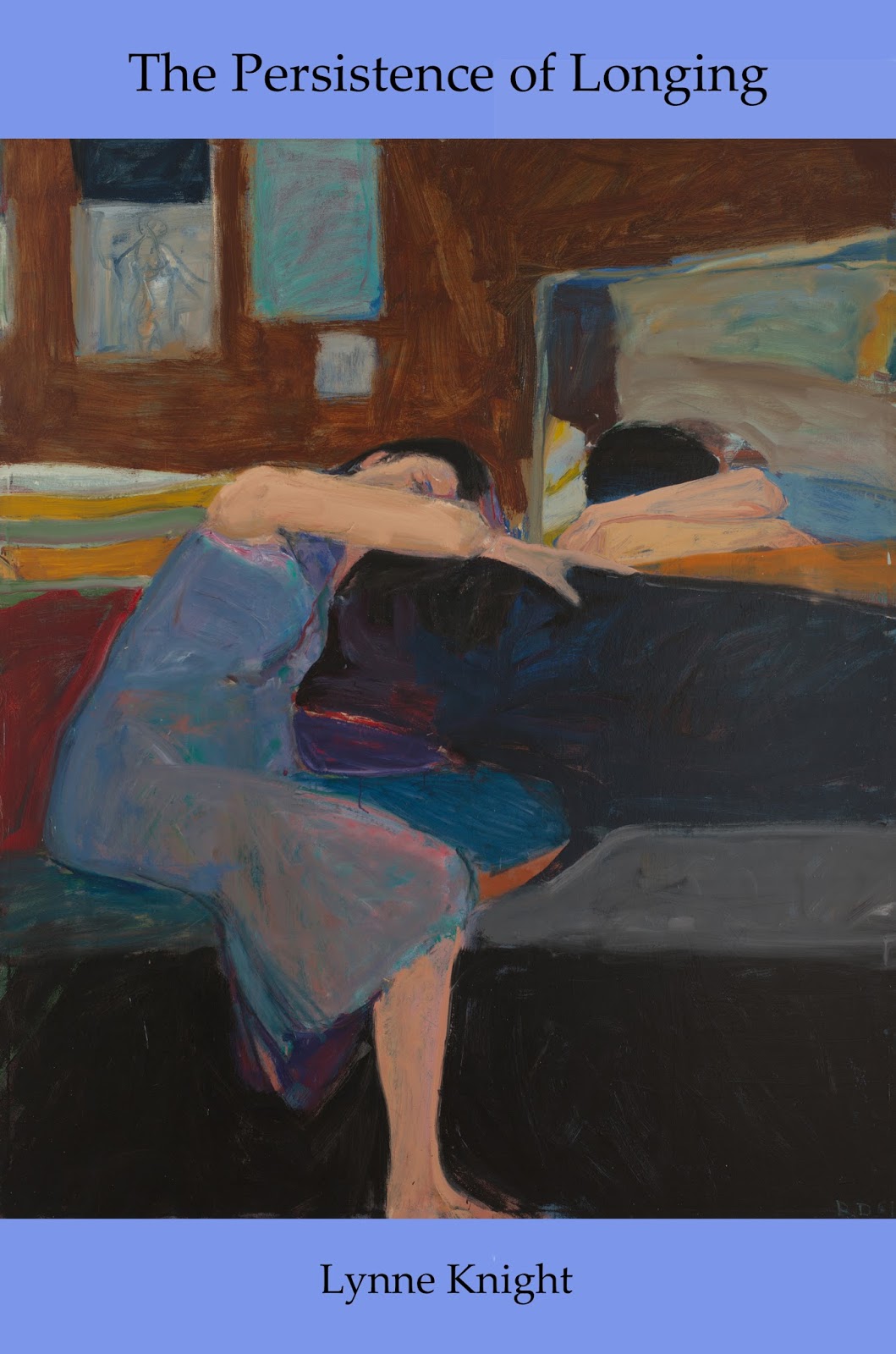
Lynne Knight, The Persistence of Longing
Jessica de Koninck, Cutting Room
Christine Stewart-Nunez, Bluewords Greening
Patricia Clark, The Canopy
Carolyn Miller, Route 66 and Its Sorrows
Susanna Lang, Travel Notes from the River Styx
Hayden Saunier, How to Wear This Body
Michelle Menting, Leaves Surface Like Skin
Karen Paul Holmes, No Such Thing as Distance
Geraldine Connolly, Aileron
Michael T. Young, The Infinite Doctrine of Water
Lisa Bellamy, The Northway
Paige Riehl, Suspension
Gary J. Whitehead, Strange What Rises
Ann Fisher-Wirth, The Bones of Winter Birds
Sarah Wetzel, The Davids Inside David
David Graham, The Honey of Earth
Kory Wells, Sugar Fix
Dion O’Reilly, Ghost Dogs
Ann Keniston, Somatic
Yvonne Zipter, Kissing the Long Face of the Greyhound 
Heather Swan, A Kinship with Ash

In addition, the first title in our Redux series has just been published. This will be followed by the second title in February:
Patricia Clark, Self-Portrait with a Million Dollars 
Hayden Saunier, A Cartography of Home (forthcoming)

Terrapin expects to publish the four recently accepted manuscripts in 2021. Look for new books by the following poets:

Robin Rosen Chang
Meghan Sterling
Jeff Ewing
Diane LeBlanc

While our main focus is on single-author collections, we’ve also published three anthologies:
The Doll Collection, ed. Diane Lockward
The Book of Donuts, eds. Jason Lee Brown and Shanie Latham
A Constellation of Kisses, ed. Diane Lockward

And we've published three craft books:
The Crafty Poet: A Portable Workshop
The Crafty Poet II: A Portable Workshop
The Practicing Poet: Writing Beyond the Basics

A fourth craft book is underway but still very embryonic.


Terrapin looks forward to continuing to publish poetry books.We pride ourselves on the quality of our books and the beauty of their covers. We also pride ourselves on the collaborative relationship we try to build with each poet.

We hold two open reading periods each year. Our next open reading period will be January 24 - February 28, 2021. Guidelines are posted at the website. Perhaps you’ll join our list of poets?

Sunday, January 20, 2019

The Blurbification of Poetry Books

Back in April of 2012, I wrote a post called "The Fine Art of the Blurb." I'm going to reproduce that post here as it remains relevant and then add some new thoughts:

The Parnassus blog recently posted a piece entitled The Trouble with Blurbs. The writers lament the often sad state of the blurb.

The post begins with an example of a good blurb: “'This is just the book to give your sister—if she’s a loud, dirty, boozy girl.' Thus spake Dylan Thomas on Flann O’Brien’s novel, At Swim-Two-Birds. And they are fighting words, indeed—an author would be hard-pressed to find a better endorsement for her book jacket."

Absolutely. I already want to read that book though I've never heard of it or Flann O'Brien. I suspect that even if I hadn't heard of Dylan Thomas I'd still want to read the book. 

That example, however, is not typical of blurbs being written lately, according to the members of the Parnassus staff who have noticed a trend in blurb-writing towards "the vague, the hyperbolic, the flat-out useless." 

Editors cite the too often found use of bothersome words such as "luminous" and its variations. I'd like to add "transcendent" as an equally prevalent and annoying adjective.

The staff also slams the abundant citing of contrasts found in the collection being blurbed. That bothers me less than the use of phony words. For me, one of the marks of a strong collection is its ability to embrace opposites, but I agree that vague terms such as "dark, yet playful" should be replaced by more specific ones.

The staff's third beef: Too often, poetry collections are blurbed as “important,” “necessary,” or “urgently-needed.” Oh brother, I could not agree more. I am so sick of seeing collections described as "urgent" and / or "necessary." What the heck do those words even mean when applied to poetry?

I like blurbs that tell me something specific about the collection, something that will let me know if it's for me or not. I intensely dislike generic blurbs that could have been pasted onto the back of any number of books and give no evidence that the blurber even read the book being blurbed. 

I also dislike hyperbolic blurbs. For example, I had to guffaw a bit when I recently read a blurb for a first book of poetry. The blurber described the poet as "a major American voice." How could the poet of a first book already be major? I can't trust a blurb that overdoes it with the praise. 

Here's my own complaint: The blurb-hungry poet who asks half a dozen or more poets to write a blurb and then plasters them all over the back cover. This always strikes me as gluttonous and egomaniacal. It is also an imposition on the time of too many people, all of whom must spend several hours reading the manuscript and then writing the blurb. Unless, of course, they dip into their bag of generic blurbs.

*************
When I wrote that post, I was writing as a poet who several times had had to ask for blurbs and several times had been asked to provide a blurb. That was four years before I started Terrapin Books. Now I'm considering the blurb as a publisher as well as a poet and former blurber.

My typical poet at Terrapin kind of dreads asking for blurbs. It often feels like an imposition. Also, if the poet has published several books already, she may be running out of potential blurbers. That's not fatal. A few of my poets have contacted poets they knew very well but only through their books. Each of these blurb-seeking poets contacted a poet he admired, expressed his admiration and familiarity with the potential blurber's work, and made his request. Sometimes the answer was no, but more often it was yes. So while it may be preferable and more successful to make requests of poets you have met, it's not absolutely essential. A few of my poets have also chosen to use two blurbs and then excerpts from reviews of earlier books. That works very nicely, but, of course, you have to have earlier books along with some reviews.

I always advise my poets not to be overly bashful when asking for a blurb. The request is a compliment. If the person agrees to do the blurb, her words and her name will be on the back of your book and on the website of the press. The blurb and blurber's name will also most likely appear on Amazon and other online sites. In other words, it's some nice exposure for the blurbing poet. Now, of course, some people don't need the exposure and some legitimately don't have the time to do a blurb, so you might get a no to your request. Don't take it personally. Just ask the next person on your list.

I still favor no more than three blurbs and limit my Terrapin poets to no more than three. Don't be a hog and overburden too many nice poets. Then give your blurbers a reasonable amount of time to read your manuscript and write the blurb. I've found that one month works well for most people. If a blurber needs more time, I can usually give it. But here's a hard truth: most blurbers do the blurb just before it's due, whether that's three months or one.

I also want to mention one kind of blurb I see quite often and don't care for. That's the one that's a collage of snippets of quotations taken from the poems and stitched together into sentences. These always strike me as lazy blurbs and usually don't make a lot of sense. So if you're a blurber, please restrict yourself to a maximum of two quotations per blurb.

For the poet who has been the recipient of blurbs, be sure to send each blurber a complimentary copy of your book. And don't ever, ever ask a blurber to buy your book! That is just really bad manners.

The blurb is a frequent anxiety-laden topic of discussion on Facebook. Some people have made alternative suggestions, e.g., putting a poem on the back cover. That's a cool idea, but for now most publishers want you to obtain blurbs. So just go about it sensibly and trust that it will work out. Then later when some other poet with a new book coming out asks you to write a blurb, remember the poets who said yes to you and say yes to the poet who now asks you to do a blurb. 

Monday, February 12, 2018

The Story Behind the Cover

As the publisher of Terrapin Books, I like to ask each of my poets what they have in mind for a cover. Although I reserve the right to turn down suggested artwork, so far that hasn’t happened and each Terrapin poet has had input on their cover art. For example, Neil Carpathios’ cover for Confessions of a Captured Angel was done by his wife, a graphic designer. Christine Stewart-Nunez’s cover for Bluewords Greening was designed by her former student. Patricia Clark’s cover art for The Canopy was contributed by her husband, a painter. Hayden Saunier festooned her own black coat with greens from her yard and a set of antlers, then hung the coat on a wall and took a photo of it. I extracted the background and replaced it with a solid blue background. The result is a cover much like a piece of surrealistic art.

When I asked Geraldine Connolly what she envisioned for the cover of her forthcoming book, Aileron, she suggested a farmhouse. I began to hunt for one, but didn’t find anything special enough. Then one day while wasting my time on Facebook, I saw some unusual pieces of art coming down the feed—“feather art” by feather artist, Lewis Mark Grimes. I sent several images to Gerry and asked what she thought of them. Following is a discussion of what transpired from that point on in our search for the perfect cover.


Diane: Tell us what the word “aileron” means and why your first thought for your cover art was a farmhouse?

Gerry: An aileron is a small hinged surface—a flap—on an airplane wing, used to control balance.

 It was difficult for me to think of a way to incorporate that technical concept into a concrete image for the book cover. Airy images are hard to translate into solid pictures.

A photo of an airplane wing didn’t seem quite right because the reader might see only the wing and not see or understand where the small flap was and what it meant to the flight of the plane.

The main theme of Aileron is the loss of a cherished family farm to a large company and how to deal with that emotional loss, to rise above it. So that’s why I thought a photo of a farmhouse might work. I spent a couple of days looking through stock photos of farmhouses, but something was always wrong, the setting, the color of the barn, the crops in the field were not quite right. And I couldn’t find a photo of our particular farm, so I felt a little frustrated.

After weeks of obsessing over commas, capitals, misspellings, spacing issues, the acknowledgments page, the title page, the author’s page, all of a sudden when you asked what I had in mind for a book cover, I was kind of panicked. Vague thoughts of airplane wings and photos of farmhouses were floating in my mind, but I was actually floored. I knew that I really liked the Terrapin covers I’d seen, so I hoped you might be helpful there, and thankfully you were!


Diane: When I sent you the pieces of feather art, you wrote back that you’d stick with the farmhouse or a barn. Why?

Gerry: When you first sent ideas for cover art, I think there were seven images, five pieces with feathers plus one barn and one abstract painting. Seeing all seven together confused me a little because they were so different, so I clung to the idea of something that was an exact representation of a farm, which was a farmhouse or a barn. And the barn had happy associations for me, of safety and security. When I looked out the windows of our farmhouse, that’s what I often looked at, the big white barn and the silo next to it, the fields beyond. As a child, I loved the soft hay, the smell of the bales and oilcans and the animals, the texture of the old beams and the wood floor, the patterns of light and shadow. So yes, I clung to the idea of the farmhouse or barn. But I’m glad we found something more upbeat and visually exciting.


Diane: A few days later you emailed and said that one of the pieces was “haunting” you. What was responsible for that haunting?

Gerry: When I again looked over the seven art pieces that you’d sent in one file, I could see that the barn was, in fact, boring. You sent a print of one single feather, a couple of images of dream catchers (those nets with trailing feathers) and at the very bottom, two pieces of artwork done with molted feathers by Lewis Mark Grimes. I liked those two pieces best because they seemed unique, but I still had the barn idea fixed firmly in my head. I spent another day looking at stock photos of barns and feeling less and less satisfied with that idea. I looked at all of the images again that evening and decided, as they say, “to sleep on it.”

I woke up the next morning with the image in my mind of the white feathers exploding from a sea of blue dots. If it was strong enough to wake me, I thought, that’s a good sign. All day the image stayed with me. It “haunted” me in a very good way, so I decided to seriously consider it. The covers of my three previous books were lovely, but very conservative and representational. I thought a departure to something more abstract and mysterious might be refreshing. I showed the image to my husband and he loved it too. “Feathers,” he said, “which remind me of flight, of wings, of airplane wings, that’s perfect.” And when I looked at it metaphorically, I saw in that explosion of wings, a suggestion of Hiroshima, a tragedy, which suited the theme of losing the farm to a mining company.


Diane: I was similarly haunted, so I tracked down the artist to find out if we could get permission to use the piece. He said yes! While Lewis and I then worked out the licensing agreement, I did a sample front cover layout, that white feather image shaped like a fan against a black background. What was your first response to the initial design? Did we make any changes to it?

Gerry: The background was black and I’ve always liked black covers with a brighter color for the images and typeface. When you isolated that image and did a sample first cover, I was convinced that the image was perfect. Not representational, and so radiant and striking. Everyone I showed it to had strong positive reactions. Comments about the cover included words like “mysterious,” “vivid,” “engaging,” “spectacular.” I felt more and more sure that it was the right decision, and I was very happy that the artist gave us permission to use the piece.


The only change I suggested was making the print of the title a little larger. There was no doubt in my mind that this was exactly the right mood and message that I wanted to convey about my book. The design was so compelling and so suitable that very little change was necessary.


Diane: The cover we ended up with isn’t even remotely similar to the initial idea of a farmhouse, yet it strikes me as metaphorically perfect for your book. How do you see this cover as fitting your book?

Gerry: Sometimes your first ideas are your best ideas. Sometimes, they’re your worst. I trusted myself on an intuitive level with the decision to use the feather art and, after my initial reluctance, it turned out extremely well.

The elements of air rule this collection: birds, wings, trees. The central metaphor of the aileron on an airplane wing, which controls balance, suggests the importance of not surrendering to sadness but finding new direction, staying aloft above the blue dots which suggest sadness so that the white feathers lifting upward as in a fan connect with the theme beautifully. A lot of the book is about staying in balance even amidst trouble and an immense sense of loss. It was important to me that the final poem lift upward. When we discussed the ordering of the poems, there was thought given to ending the book with a poem that contains the image of a horse pulling freight into midnight’s darkness, but that seemed entirely wrong. The decision to end on a pleasing memory of a swing from my childhood that elevates the mood up and out into the world seemed fitting.

The collection is firmly rooted in the natural world, the landscapes of a Pennsylvania childhood, of Montana summers and a move to the Sonoran Desert which offers a strange but healing landscape, a mixture of oddness and wonder that, in fact, Lewis Mark Grimes’ work of art also conveys. It was a beautiful synchronicity and I couldn’t be happier with the cover. So much time is put into crafting the poems, revising them, arranging them in the best way for an effective narrative, but so little thought is given until the very last moment about the cover which is, of course, the reader’s first impression of the book. I like the idea of the reader being introduced to my book with this beautiful and original design. Thank you, Diane, for helping me find the way to it.


Geraldine Connolly is a native of western Pennsylvania and the author of three previous poetry collections: Food for the Winter (Purdue University Press), Province of Fire (Iris Press), and Hand of the Wind (Iris Press) as well as a chapbook, The Red Room (Heatherstone Press). She is the recipient of two NEA creative writing fellowships in poetry, a Maryland Arts Council fellowship, and the W.B. Yeats Society of New York Poetry Prize. She was the Margaret Bridgman Fellow at the Bread Loaf Writers' Conference and has had residencies at Yaddo, Virginia Center for the Creative Arts, and Chautauqua Institute. Her work has appeared in Poetry, The Georgia Review, and Shenandoah. Her work has also been featured on The Writer’s Almanac and anthologized in Poetry 180: A Turning Back to Poetry, Sweeping Beauty: Poems About Housework, and The Sonoran Desert: A Literary Field Guide. She lives in Tucson, Arizona.


Gerry’s book, Aileron, will be released on March 1. It is now available for Pre-orders.

Wednesday, January 31, 2018

Terrapin Books Is Open for Submissions


I am happy to announce that my poetry press, Terrapin Books, is currently open for submissions of full-length poetry manuscripts. Please note that our submission period closes on February 28, 2018.

Be sure to read our Guidelines before submitting. Please note that we request both a bio and a descriptive statement with your submission. Be sure to include both. Most questions are answered in our FAQs, so be sure to read that page also.

Our Guidelines ask for a manuscript of approximately 40-55 poems for a book of approximately 90-110 pages (count includes poems, front and back matter, and section pages). Please note that your book will be longer than your manuscript. If you have 40-55 poems, go ahead and submit. Let us worry about book length.

Here's some general information about the press:

We publish only poetry books, primarily single-author collections but also an occasional craft book or anthology.

Terrapin Books is committed to publishing outstanding books of poetry by outstanding poets. We intend to fully support our poets. We will edit your manuscript and work with you on revisions. We expect our poets to actively engage in promoting their books. We require our poets to maintain a dedicated website and to be a member of Facebook.

Our books are 6 x 9, paperback, perfect bound, color cover, with printed spine (poet's name, title, press).

We are committed to publishing accepted titles within six months of acceptance. We do not maintain a long list of books-in-waiting.

We offer a standard contract, a generous number of author copies, a substantial discount on additional copies purchased by the author, and an annual royalty payment.

We are the proud publisher of collections by Neil Carpathios, Lynne Knight, Christine Stewart-Nunez, Jessica de Koninck, Carolyn Miller, Patricia Clark, Susanna Lang, Hayden Saunier, Michelle Menting, and Karen Paul Holmes. We look forward to books by Geraldine Connolly (March) and Michael T. Young (April).

We welcome submissions from poets at any stage in their career. Some of our poets have a long publication history with multiple books. A few of our poets have two books out. And we are very proud to be the publisher of two debut collections.

We look forward to reading your work.


Tuesday, January 9, 2018

To Resubmit or Not to Resubmit: That Is the Question


As the publisher of Terrapin Books, I am frequently asked this question or some variation of it: If my manuscript was submitted to your press and rejected, should I resubmit it? Does it make sense to do so?

It occurred to me that it might be useful to have a discussion about this subject, so I invited Karen Paul Holmes, who once asked me this question, to participate in a Q&A. Karen’s new poetry book, No Such Thing as Distance, will be published by Terrapin Books with a release date of February 1, 2018.


Diane:   You submitted a manuscript to Terrapin Books during the first open reading period in January 2016. When it was rejected, were you given any actionable feedback? If so, what was it?

Karen:   Yes, and I really appreciated it. You suggested that the manuscript should not be frontloaded with my childhood and parent poems, but rather, those themes should be braided throughout. Other suggestions were to enhance the music/dancing motif and to include more poems that weren’t in first person.


Diane:  Did you follow those suggestions at the time? Why or why not?


Karen:  I revised and re-ordered the manuscript many many times, and yes, I took the advice before submitting to other presses.


Diane:  You did not resubmit to Terrapin for the following two open reading periods. During that year, were you submitting your manuscript elsewhere? If so, what was the outcome of those submissions? 


Karen:  I submitted to a few more contests and open reading periods. I had no feedback with the rejections except from one editor, who also said that re-ordering the poems was needed. (He had seen an earlier version similar to the one I sent Terrapin the first time). 


Diane:  What made you eventually decide to resubmit to Terrapin?

Karen:  I had seen what a good job Terrapin had done to publicize its books. I admired your own poetry and The Crafty Poet books you edited. I also respected your dedication to publishing good poetry and looking after your poets. I knew you read the submissions yourself, and that was important to me, as well as the fact that you’d actually edit the book rather than just accepting what I submitted.


Diane:  How did you revise the manuscript? Were poems added or removed? Were structural changes made? How satisfied were you with those changes?

Karen:  I added and removed poems many times so that I probably ended up with about 15 versions of the manuscript. It continued to evolve as I wrote new poems and tried different approaches to the whole.

I totally re-thought the structure from many angles. I even tried to make it a chapbook at some point, but just couldn’t pare it down that far. I made a spreadsheet listing each poem’s voice, theme and subtheme, narrative chronology, and form (prose vs couplets vs no stanzas, etc), so that I could consider how the poems related to each other in different ways. I wanted a somewhat logical narrative flow without it being too predictable nor having jarring jumps between poems. I was using recipes as section dividers, so the order within the sections needed to make sense.


Diane:  When you then resubmitted to Terrapin, what happened?

Karen:  It got accepted very quickly!


Diane:  Following acceptance, what process did your manuscript go through?

Karen:  As you will remember, you and I went back and forth on some line edits and other specific changes. I can’t say this wasn’t somewhat stressful for me, because, you know, those lines were sometimes my darlings! But I wanted an editor like you and appreciated your dedication to making it as good a book as possible.

You deleted nine poems that you felt weren’t as strong as the rest, and I was okay with that. You also asked me to add a couple of my poems that you’d read in journals. The order didn’t change much, but you wanted the recipes to be in the back of the book, and I liked that idea. You also gave me written instructions on how to list and format the acknowledgments for poems that had been published elsewhere. While revisions were being made, I asked for blurbs, and three poets were willing to provide them rather quickly.

Once the edits were complete, it was time for the interior layout of the book. You were very quick, and I found very few errors when proofreading the formatted manuscript. I loved the font and style you chose. I also had a trusted friend proof it for me. You and I discussed cover art, and when I suggested a painting by my sister, you enthusiastically agreed. Then we went back and forth on the cover design until a final design was chosen.

As we were wrapping up final details, my beloved dog died. Then, even worse, 10 days later, my life partner had a fatal heart attack. Needless to say, I couldn’t carry on very well. You were kind and moved the publication date to almost two months later, so that I could have a chance to get my bearings. Needless to say, the launch of my book is bittersweet. My beloved was a huge believer in my work, and he was as excited as I was for my second collection. I will be buoyed up by his faith in me as I do readings and other promotional activities.  


Diane:  Given your own experience, what advice would you give to someone considering resubmitting to a press that previously rejected the manuscript?

Karen: I asked you whether Terrapin would be interested in seeing my revised manuscript, and you said yes. So asking the publisher is my advice to anyone who has been given feedback on a previous submission. And, of course, let the publisher know that the suggestions were incorporated into the revised manuscript.

If no feedback was given, I’d urge the poet to be sure to put strong and unusual poems in the front, but also to make sure there are strong poems throughout. Since poets often have a hard time determining which poems are strongest, getting feedback from others helps.

It’s also wise to have someone else read the manuscript, paying attention to whether the order works. The weaving of like-themes throughout the book is very important, because it adds interest and pulls the reader through. I think we poets tend to want to lump like poems together, and that was my first impulse, but I became convinced otherwise.

I have heard that poets should re-submit to presses that have different readers during the next open reading period or contest, because the manuscript might appeal to these new readers. Whether or not there are different readers, the competition will be different each time—a poet’s manuscript might stand out from the pack when it didn’t before, especially if it’s been revised with care. One hears stories over and over of writers who sent their books out for years before being published—perseverance definitely pays.


Karen Paul Holmes is also the author of Untying the Knot (Aldrich Press 2014). She is a past recipient of an Elizabeth George Foundation writing grant and was named a “Best Emerging Poet” by Stay Thirsty Media in 2016. Her work has appeared in such journals as Prairie Schooner, Crab Orchard Review, and Poet Lore. She is the founder and host of the Side Door Poets in Atlanta and the Writers’ Night Out in the Blue Ridge Mountains. Following a corporate career in marketing communications, she now works as a freelance writer. She lives in Georgia.


Karen's book, No Such Thing as Distance, is now available for Ordering


Terrapin Books has two submission periods for full-length poetry manuscripts:

 January 24 thru February 28

August 1 thru August 31

Please read our Guidelines and our FAQs.

Thursday, September 28, 2017

Second Anniversary of Terrapin Books

October marks the second anniversary of Terrapin Books. It was just two years ago that I began the journey towards becoming a small press publisher of poetry books. In spite of my initial trepidations, I must say that it’s all gone quite smoothly. I love this new work. it keeps me out of trouble and gives me the joy of putting more poetry books into the world. Among the greatest pleasures is giving a poet a book.

There have been challenges, among them and top of the list was learning how to format a book. I really had no idea how to do that when I decided to do open a press, but I asked the right people the right questions and received the right answers. I then sat in front of my computer until I figured it out. Now I can do all kinds of fancy stuff like adjust margins, place page numbers at bottom right and left (instead of center), and design a cover. One step at a time and a belief that I could do it with patience and persistence—that’s what worked for me.
I could not be more proud of the books that Terrapin has thus far published. Terrapin now has 9 single author poetry books, two craft books, and two anthologies. Four additional titles have just been accepted for publication. I’ve held 5 open reading periods and have accepted 2-4 books each time. I am committed to taking only a limited number of manuscripts so that I can get the books out in good time and give each book the attention it deserves. There will be no cranking out one book after another.

I’m also proud to say that I’ve run no contests and don’t plan to run any. All of my authors are winners.

I’m proud, too, of the attention that the poetry world has been paying to Terrapin Books. We’ve had multiple features in Verse Daily, two in Poetry Daily, one forthcoming in Ted Kooser’s American Life in Poetry, and one in The Missouri Review. We’ve been getting some lovely reviews in such places as the Washington Independent Review of Books, Broadkill Review, and Rain Taxi Review of Books. More on the way.

Terrapin now has its very own online bookstore. Check it out. We pay shipping and handling. Our books are also available at Amazon, B&N, and lots of other online sites.

Look for our next open reading period January/February 2018.


Saturday, July 15, 2017

Terrapin Books: Upcoming Reading Period


Terrapin Books will re-open for submissions of full-length poetry manuscripts on July 25 and will remain open thru August 31. Now is the time to get your manuscript ready. Be sure to read our Guidelines and our FAQs. Also, please be sure to follow the Guidelines! We ask for a bio, so you really should send one. We ask for a 4-6 sentence description of your manuscript, so you really should send one; in fact, we take it as a sign of laziness if you don't or, worse, we begin to suspect that you don't know what your manuscript is about. We know that request is a difficult one, but we hope it will help you to organize and focus your manuscript.

The Guidelines ask for:
"A manuscript of approximately 40-55 poems for a book of approximately 90-110 pages (page count includes poems, front and back matter, and section dividers)"

This is the one item that brings the most questions. We've rewritten it in an attempt to clarify, but still get a number of concerned questions about it. Please remember that "poems" and "pages" are not the same thing. There will be pages in your book that don't have poems on them. Let's say that you have 45 poems divided into 5 sections. If each poem is just one page, you still will have at least 10 additional pages for the section dividers (both sides count). You will also have approximately 12 pages of front matter (e.g., copyright page, title pages, table of contents, dedication page, epigraph page). Then there will also be back matter (Acknowledgments page or pages, bio). Keep in mind that each blank page counts in the page count. Of course, if some of your poems are more than one page, that increases the total page count. Now if this explanation has merely confused you further, just keep in mind that if you have 40-55 poems, you're probably fine. Let us worry about the page count.

Terrapin Books has so far published 8 poetry collections by fabulous poets—and one more is moving towards publication. We have also published two craft books and one poetry anthology with another soon to appear. But our primary focus is on full-length poetry books. We select carefully, taking only a limited number of manuscripts during each reading period (4 during the first one, 2 during the second, and 3 during the last one). We carefully edit each manuscript and work closely with each poet to put out a wonderful book. Because we are selective and don't have a big backlog, we move along quite quickly. You won't have to wait around for 2-3 years for your book to see the light of day. We pledge to get our books out within a year of acceptance, but in actual practice, we've been getting them out within 6 months.

We pride ourselves on the quality of the poetry and the beauty of the books. Poets are invited to offer input on their covers and book design, though the final say belongs to the publisher. One poet's cover art was done by his wife. One cover is a painting done by the poet's husband. Another cover is a painting done by the poet. One is a photo taken by a friend of the poet. The most recent cover is a photo of the poet's coat with its pockets stuffed with greenery from the poet's yard.

We are thrilled that Terrapin Books, not even two years old yet, has received positive attention from such places as Poetry Daily, Verse Daily, The Missouri Review, and the Washington Independent Review of Books. And we congratulate Lynne Knight whose book, The Persistence of Longing, was a finalist for the Northern California Book Award in Poetry as one of the best works by a northern California poet published in 2016.

Terrapin looks forward to reading your manuscript.


Tuesday, August 9, 2016

Terrapin Books Now Open for Submissions


Terrapin Books is now reading full-length poetry manuscripts during its second Call for Submissions. Our doors opened for submissions on Monday, August 1, and will remain open thru Wednesday, August 31.

Please read and follow our Guidelines. Then make your submission via Submittable.

We anticipate accepting 2-4 manuscripts. We take pride in putting out beautiful books by wonderful poets. We are selective and devote time and careful attention to each book. We work closely with our authors. We do not maintain a long list of upcoming titles as one of our goals is to publish accepted titles in a timely manner.

We look forward to reading your work.

Take a look at the covers of our current titles:


Wednesday, May 21, 2014

West Caldwell Poetry Festival: A Photo Tour


The West Caldwell Poetry Festival was held on Sunday, May 18. This was the 11th year I've run this event, but this year I made significant changes to the format. It seemed like time for a change. In the past the focus was on literary journals and the event was called Poetry Festival: A Celebration of Literary Journals. Each of 12 journal editors invited two representative poets to read, so we had a total of 24 poets reading.

This year I changed the focus from journals to poets with new books. I invited six such poets. I invited journals but only eight this time as I knew I would need table space for the four book publishers I also invited. Then I structured the day into four time slots: two for readings, one for a publishers' panel, and one for a creative process panel with the six poets. I built in twenty minutes between each time slot so that visitors would have time to purchase books and journals.

The day was absolutely exhilarating. I could not have been happier with the entire event. We had a much better turnout than last year with a number of people coming for the first time. We sold more than twice as many books as we sold last year. And everyone seemed to have a good time. I only wish we'd had a bit more time to soak up even more poetry and poetry conversation.

To give you a sense of the day, here are some photos.

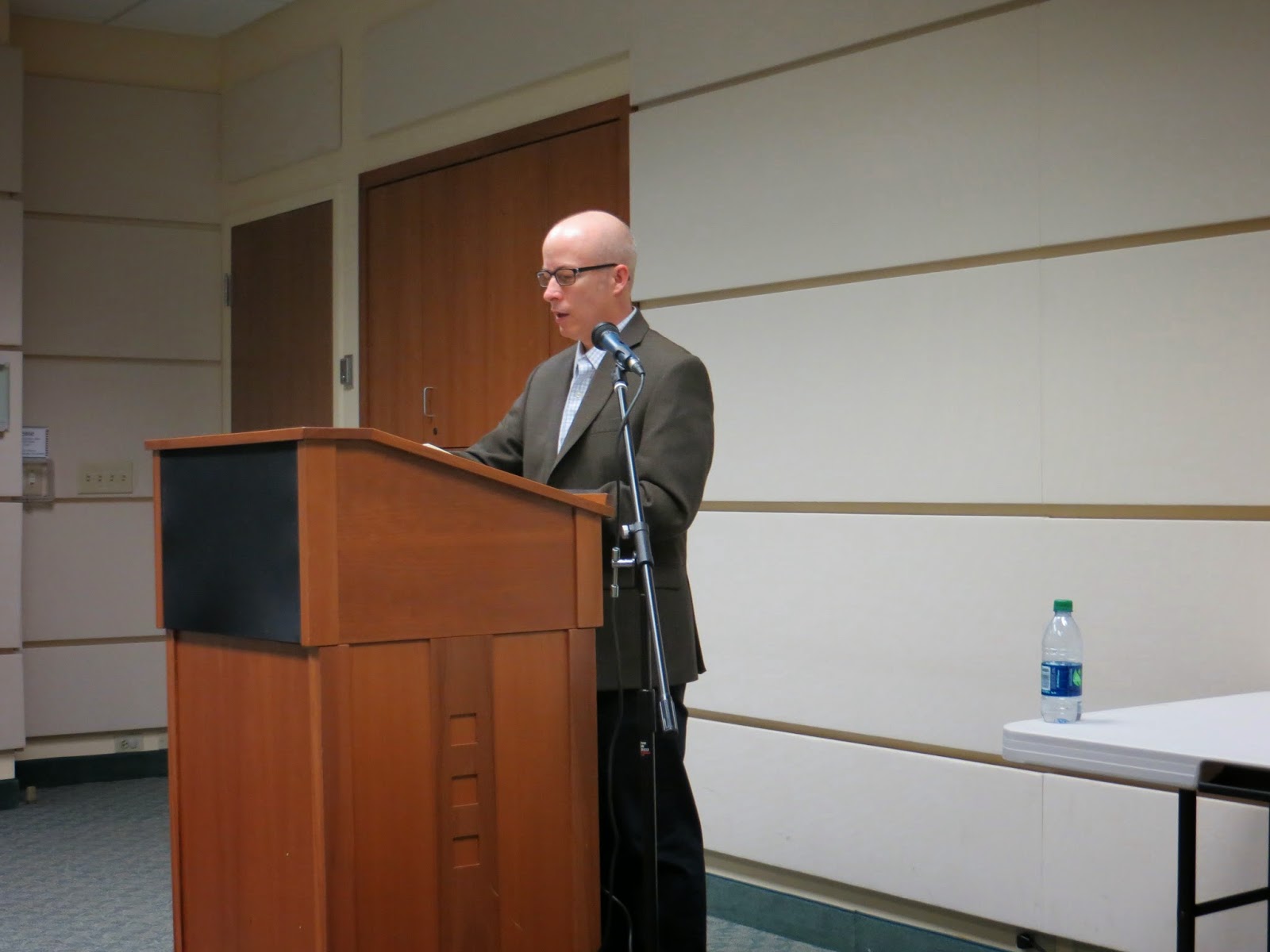
I welcome the audience

Priscilla Orr reads from Losing the Horizon

 Gary J. Whitehead reads from A Glossary of Chickens

Michael T. Young reads from The Beautiful Moment of Being Lost

Publishers' Panel: Anna Evans (Barefoot Muse Press), Roxanne Hoffman (Poets Wear Prada Press),
Joan Cusack Handler (CavanKerry Press), Ellen Foos (Ragged Sky Press)

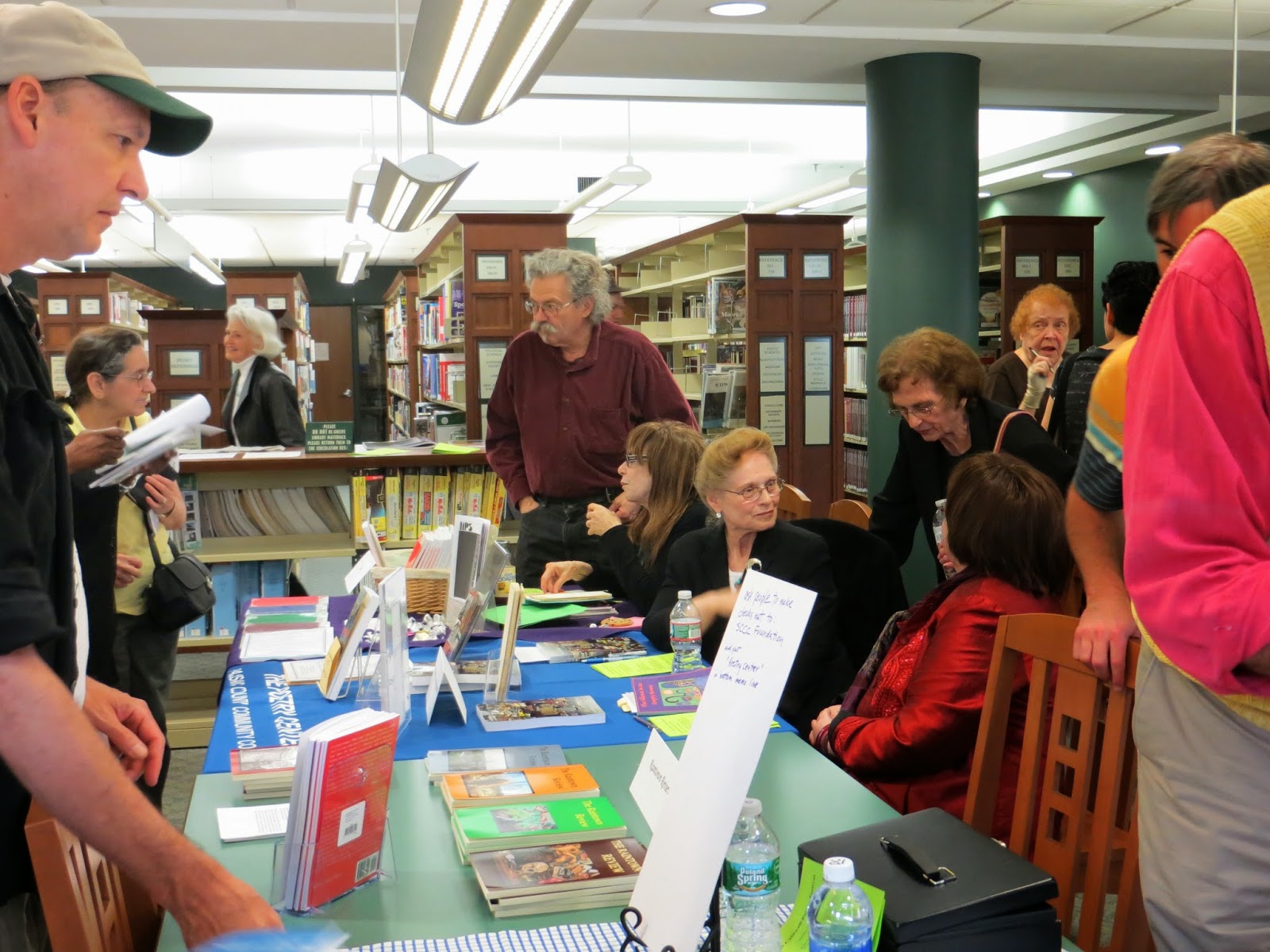
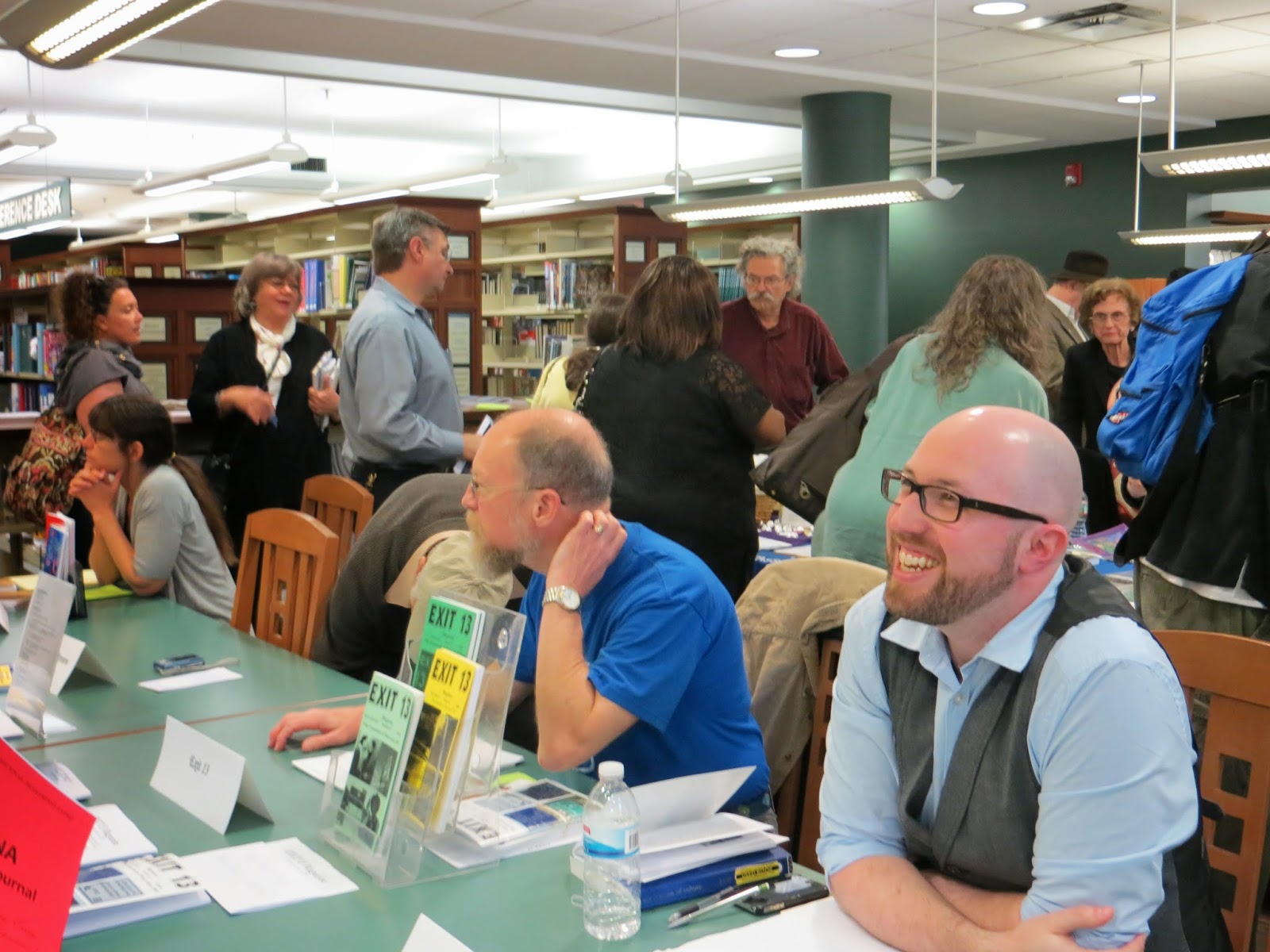
Visitors peruse the journals

Visitor poets Deb Gerrish and Chuck Tripi

Teresa Carson reads from My Crooked House

Maria Mazziotti Gillan reads from The Silence in an Empty House


Visitors browse the journals and talk with editors

Creative Process Panel with Priscilla Orr, Michael T. Young, Gary J. Whitehead, 
Teresa Carson, Maria Mazziotti Gillan, and BJ Ward

Editors Christine Waldeyer, Tom Plante, and Matt Ayres

Joan Cusack Handler and Maria Mazziotti Gillan

Poets Teresa Carson, Maria Mazziotti Gillan, and BJ Ward signing books

Michael T. Young signing his new book

Poets Maria Mazziotti Gillan and BJ Ward in conversation

BJ Ward signing his new book

Cookies for everyone!


Tuesday, April 22, 2014

It's National Poetry Month; Therefore, Buy Books. Part IV.


We're already at Week 4 of National Poetry Month. I hope that your mailbox has been loading up with new poetry books. I also hope that for every book you buy two of your own will be sold.


Susan Elbe 
The Map of What Happened (The Backwaters Press)
won the 2014 Julie Suk Prize

Click Cover for Amazon


Susan Elbe's "Map" is an elegant work of starkly-hued reminiscence, a love letter to the city that raised her and an unflinching exploration of the littered personal landscape we all must travel. These deftly-crafted stanzas will conjure home for you—wherever that home is, whatever shape it has taken.
                                                                       —Patricia Smith


Read sample poem at Zocalo Public Square
Read sample poems at diode


Rachel Dacus
Gods of Water and Air (Aldrich Press)

http://www.amazon.com/Gods-Water-Air-Rachel-Dacus/dp/0615842410/ref=sr_1_1?s=books&ie=UTF8&qid=1398019054&sr=1-1&keywords=gods+of+air+and+water
Click Cover for Amazon


In Gods of Water and Air, the humor and irreverence of a 1960’s rebel mix with feminist, expressionist, and lyrical motifs as the author openly explores her feelings, relationships, and spiritual musings. Inheriting her late painter father’s artistic eye, Dacus paints with words. Her writing can be indirect and slant, but is always transparent, clear, and immediate, eschewing the often impenetrable poetic structures one frequently finds elsewhere.
                                                                     —Ann Wehrman


Read sample poems
Read sample poems from Prairie Schooner


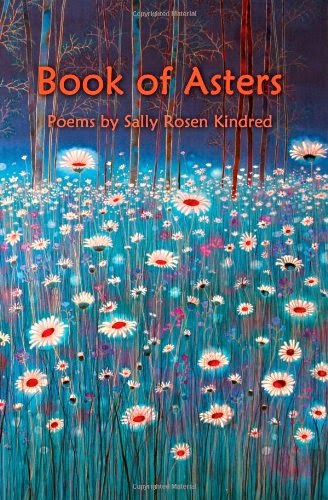
Sally Rosen Kindred
Book of Asters (Mayapple)

http://www.amazon.com/Book-Asters-Sally-Rosen-Kindred/dp/1936419343/ref=sr_1_1?s=books&ie=UTF8&qid=1397049837&sr=1-1&keywords=sally+rosen+kindred
Click Cover for Amazon


Sally Rosen Kindred has a gift for creating poems I wish I’d written. Here is a garden of witness, of forgetting, of memory and music and love s bright blare. Aster as metaphor, aster as ghost bouquets of common weeds and wildflowers haunt us in these poems, and teach us to lean toward their mysterious light, to blossom with their stories, and to grow bruised, but fed by their songs. 
                                                                        —Meg Kearney


Jeffrey Harrison
Into Daylight (Tupelo Press)

http://www.amazon.com/Into-Daylight-Poems-Jeffrey-Harrison/dp/1936797437/ref=sr_1_1?s=books&ie=UTF8&qid=1394986057&sr=1-1&keywords=jeffrey+harrison
Click Cover for Amazon


This book gets better each time I read it. Harrison is very skillful in a way that's almost passed out of existence: only a handful of writers can do what he does in handling the line and understanding how syntax and line work together employing the plain style with great virtuosity.
                                                                       — Tom Sleigh


Read selected poems from Into Daylight
"To a Snake" featured at The Writer’s Almanac


Tuesday, April 1, 2014

It's National Poetry Month; Therefore, Buy Books. Part I.


Throughout this month I'll be posting poetry books that I have bought, read, and admired—and that I now recommend to you. Poets need support. Nothing lifts the heart of a poet more than a book purchase by a new or returning reader. Keep in mind as you juggle pennies that a poetry book is one of the best bargains around. Let's say a book has 40 poems in it and sells for $16. That means you're getting each of those poems for a mere forty cents! The poet labored over each one of those poems, probably spending days, weeks, months on each one. Each one of those poems can be read and enjoyed over and over. So this month treat yourself to some wonderful books and, at the same time, make a poet happy.

Patricia Fargnoli
Winter (Hobblebush Books)
Second Place for the Julie Suk Book Award

http://www.amazon.com/Winter-Hobblebush-Granite-State-Poetry/dp/1939449014/ref=sr_1_1?s=books&ie=UTF8&qid=1394983184&sr=1-1&keywords=patricia+fargnoli+winter
Click Cover for Amazon
Open this book, and you will find "a blind woman / who tells us / the dreams of the blind." You will sense the snow in your hands and the "scent of raspberries and lime, / a wooden chair rocking." You will see a man who "stands in a salt marsh up to his knees in the black water" and "some stranger waving to another stranger, / waving." Who are these strangers, reader, if not ourselves? Patricia Fargnoli loves this delicacy of suggestion, tells us the dreams of the blind, which are perhaps our own, tells us of the natural world, which around us is vanishing. This is a book where, "before all the bridges have burned / the cows will come home." Yes, for those who wait "Cometh the hour, cometh the cows." And so, "in the silence of horses," one perhaps, hears one s own voice more clearly. And then come "blind horses" with the naked woman, and also "six white horses eating gray sky" and "the horses rear and bolt with the wide-eyed children." This is a bestiary of the spirit.
                                                                        —Ilya Kaminsky

Read Pat's poem "Hunger" on Poetry Daily.
See Pat's Sunday Poem feature at Gwarlingo.


Susan Rich
Cloud Pharmacy (White Pine Press)

http://www.amazon.com/Cloud-Pharmacy-Susan-Rich/dp/193521053X/ref=sr_1_1?s=books&ie=UTF8&qid=1394983456&sr=1-1&keywords=cloud+pharmacy
Click Cover for Amazon

In Cloud Pharmacy, Susan Rich transforms unease into beauty--sensual and marvelously conflicted poems of romantic love, memory, and identity. These poems weigh gorgeous evidence but never offer simple decisions. The recurring image of a wildfire never lets them rest. In a central sequence of original poems, Rich explores 19th century photographer Hannah Maynard's images, looking in grief-heavy places for revelation. The result is wonderfully strange and unsettling; this is Rich's most haunting collection yet.
                                                                   —Kathleen Flenniken

Read Susan's poem "Blue Grapes," with Q&A and audio at Blogalicious.
Read two sample poems from Cloud Pharmacy.


Kathryn Stripling Byer
Descent (Louisiana State University Press)
Recipient of  the SIBA award
Recipient of the Roanoke Chowan Award

http://www.amazon.com/Descent-Poems-Kathryn-Stripling-Byer/dp/0807147508/ref=sr_1_1?s=books&ie=UTF8&qid=1394984257&sr=1-1&keywords=kathryn  +stripling+byer
Click Cover for Amazon

From the glorious opening poem, the mourning sound of the morning train weaves through Kathryn Stripling Byer’s new collection, as much a part of the hills of home as are its sins and beauties. Oh, the longing to shed forever what we are and what made us, at the same time hugging the litany to us that brings it all back: Cullowhee Creek, Buzzards Roost, hay bales, blackberries, grandmother’s gladiolas and lace doilies, and the earth that knew us better than we knew ourselves. Such longing in these pages, such hunger, such "grabbing at air."
                                                                            —Alice Friman


Read selected poems from Descent.
See Kathryn's Sunday Poem feature at Gwarlingo.


Julie L. Moore
Particular Scandals (Cascade Books)

http://www.amazon.com/Particular-Scandals-Poems-Poiema-Poetry/dp/1620327880/ref=sr_1_1?s=books&ie=UTF8&qid=1395157090&sr=1-1&keywords=particular+scandals
Click Cover for Amazon


These are poems that span our daily lives and ask the hard metaphysical and theological questions living brings. . . . They are alert (without sentimentality or false transcendence) to the grace and beauty, both ordinary and commonplace, that open our hearts and mouths in hallelujah. I so admire these poems that quietly refrain from false claims and extravagances, but patiently bring us—in their detailed evocations—closer to [our] paradoxical and mysterious lives.
                                                                          —Robert Cording

Read Julie's poem "Clifton Gorge" on Poetry Daily.
Read Julie's poem "Abundance" on Your Daily Poem.


Tuesday, April 2, 2013

Supporting Poets and Poetry

Every poet in America knows that April is National Poetry Month. There are numerous poem-a-day challenges available online for those who want to and are able to take on the challenge of writing a poem each and every day in April. I've confessed here before that I'm just not an everyday kind of poet. I put myself at the kitchen table several mornings a week and I do something poetry-related every day. That something else might be revising, reading, listening, submitting, working on my Poetry Newsletter or blog, catching up on P&W and The Writer's Chronicle, or perusing poetry journals.

So I'm not going to take on the big challenge because I know I can't / won't do it. However, that doesn't mean that I'm not going to acknowledge Poetry Month. My plan is to attend some local readings, participate in a weekend revision workshop led by Baron Wormser at the Barred Owl Retreat in Massachusetts, and go the extra mile to support poets and poetry by purchasing as many poetry and poetry-related books as I can without ending up in debtors' prison.

I'm off to a good start. Here's what's already on my table:
On order and eagerly awaited:
Any suggestions for additional titles?

Here's a list of 30 Ways to Celebrate National Poetry Month, provided by the Academy of American Poets.

Tuesday, March 19, 2013

Girl Talk Redux


This past Saturday was the 6th annual Girl Talk: A Celebration of Women's History Month. I began this event because I thought it would be fun. I've continued running it because it is fun. A lot of fun. People say, Oh, it must take so much time to put this together. I am not being modest when I say that it does not take much time to put it together. It's held at my local library, so I don't have to clean my house. I ask for volunteers to bake cookies and others to bring beverages. I always get more than enough. The library staff sets up the room for us and arranges for two volunteers to handle the book sale table.

My job includes inviting the women poets, this year twenty-nine. If you want to run a similar event—and I encourage you to do so—that's a good number if each poet reads one poem. Invite a few more than you really think is just right because invariably a few drop out. We lost three this year due to illness. Invite poets who live pretty close to the event site. There will be fewer dropouts if the weather is uncooperative. One year we had a hurricane. This year we had snow. Also, poets who live nearby tend to bring more guests for the audience.

I also do PR for the event. Not a big job as this can all be done online. The librarian who works with me on this event sends a press release to local newspapers. I also ask the readers to each reach out and invite guests.

Each year I include some new faces and voices. Some of these new readers are women who've asked to be included; some are women recommended to me. It would be lovely to have everyone back each year, but you need to rotate a bit to keep the event fresh and to keep the total to a reasonable number.

I divide the reading into two parts, with a 15-minute break in the middle. That gives everyone a chance to browse the books and buy some. For the first few Girl Talks I invited all the readers with books to include one title for sale. However, starting last year I limited the book titles to more recent ones so the sale would be more manageable for the volunteers. This seemed to stimulate more rather than fewer sales. Fewer choices make for easier decisions? To stimulate book sales, each year I contribute copies of a craft book or anthology for a lottery. For each book a person buys, she puts her name in the basket. At the end of the day, there's a drawing. This year I gave away five copies of Wingbeats: Exercises & Practice in Poetry.

I welcome the audience and introduce each poet. I do not give bios as I want the event to move along. However, bios are posted at the Girl Talk webpage.

Following the reading, the bakers go into the kitchen and bring out the cookies for the Reception. Our approximately 80 guests are all invited to stay and enjoy the cookies and engage in some poetry conversation. More books are purchased and books are signed. Guess who goes home with the leftover cookies? Me.

Here are some photos to give a sense of the day.

 Book Sale Table. Visitors browsing and buying! What a lovely sight to see.

Crowd gathering before the reading. We filled the room. How lovely for poets to have a full room.
 Poet Deb Gerrish who so graciously brought a beautiful rose for each reader. And baked! 
And then brought beverages for one of the poets who couldn't make it. All in the midst of snow.

Jean Meyers waiting to read. I met her years ago in a Dodge Poetry Workshop.

Sandra Duguid signing her just released first book!
 
Related Posts Plugin for WordPress, Blogger...